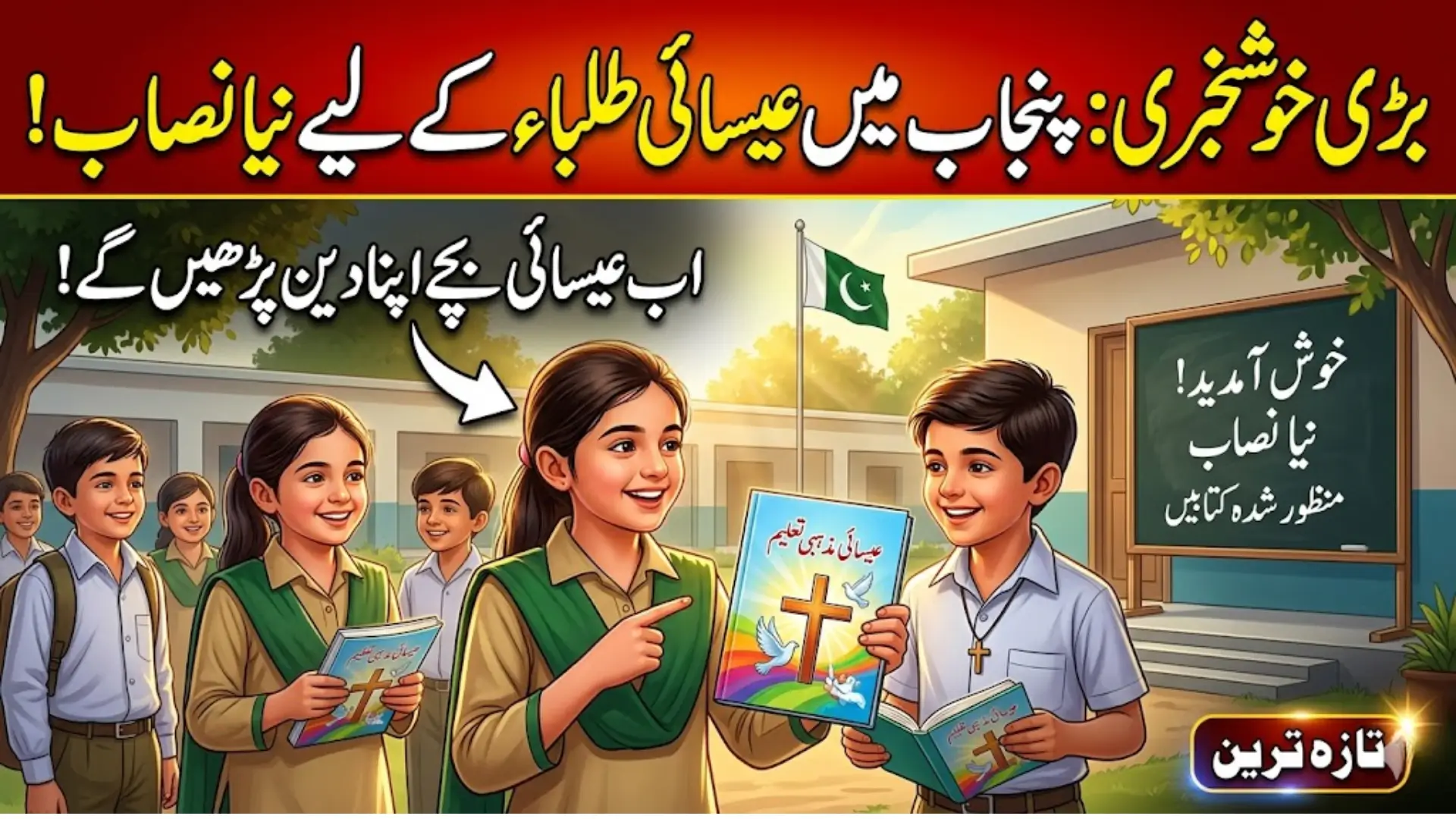
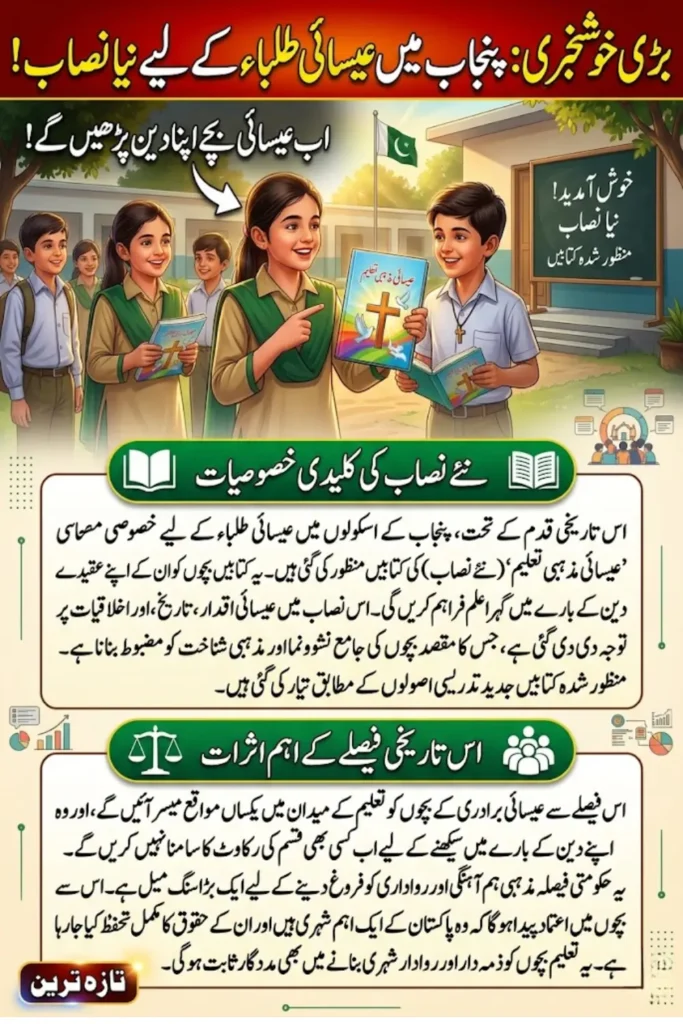
The introduction of Christian religious education in Punjab marks an important step toward inclusive and equal learning opportunities for minority students. The Punjab Education Department has officially announced the inclusion of Christian religious studies in the curriculum, allowing Christian students to learn about their own faith in schools. This decision reflects the government’s commitment to promoting diversity, equality, and respect for all religions.
New Curriculum and Notification
The Education Department has issued a formal notification to include Christian religious books in the academic curriculum. This initiative has been implemented through the Punjab Education, Curriculum, Training and Assessment Authority (PECTAA), which is responsible for curriculum development and approval.
The move ensures that minority students are no longer limited to general or unrelated subjects when it comes to religious education.
Selection of Textbooks
Under the Christian religious education in Punjab initiative, textbooks developed by Educating Youth Publication have been officially approved. These books have been carefully designed to meet educational standards and provide meaningful religious knowledge.
The curriculum covers a wide range of classes, including:
- Classes 1 to 8
- Classes 11 and 12
This ensures that students at different educational levels can benefit from structured and age-appropriate content.
Shift from Previous System
Previously, minority students in Punjab had limited choices when it came to religious education. They were often required to choose between Islamic Studies or a general Ethics subject.
With the introduction of Christian religious education in Punjab, this system has been improved. Christian students can now study their own religion instead of opting for subjects that may not fully represent their beliefs.
Benefits for Christian and Minority Students
This initiative brings several benefits for Christian students and other minority groups:
- It allows students to gain a deeper understanding of their faith
- It helps strengthen their religious identity
- It promotes a sense of inclusion and equality in the education system
By recognizing the importance of religious diversity, the government is helping create a more respectful and balanced learning environment.
Implementation in Schools
The approved curriculum for Christian religious education in Punjab will be implemented in both government and private schools across the province. Schools will integrate these textbooks into their teaching systems, ensuring that Christian students can easily access this education.
Teachers will also play an important role in delivering this curriculum effectively and supporting students in their learning journey.
Government’s Vision for Inclusive Education
This step is part of a broader vision to protect the educational rights of minority communities. The government aims to create a system where every student feels valued and respected, regardless of their religious background.
The introduction of Christian religious education in Punjab highlights efforts to promote religious freedom, social harmony, and equal opportunities for all.
Historic Significance of the Decision
The approval of a dedicated religious curriculum for minority students is being seen as a historic development. It reflects a progressive approach toward education and sets an example for inclusive policymaking.
This initiative is expected to be welcomed by minority communities, as it addresses a long-standing need for representation in the education system.
Conclusion
The launch of Christian religious education in Punjab is a major step toward fairness and inclusivity in education. By providing students with the opportunity to study their own religion, the government is promoting equality and respect for diversity.
Such reforms not only improve the quality of education but also strengthen unity within society. Moving forward, continued efforts like this can help build a more inclusive and harmonious future for all citizens.