
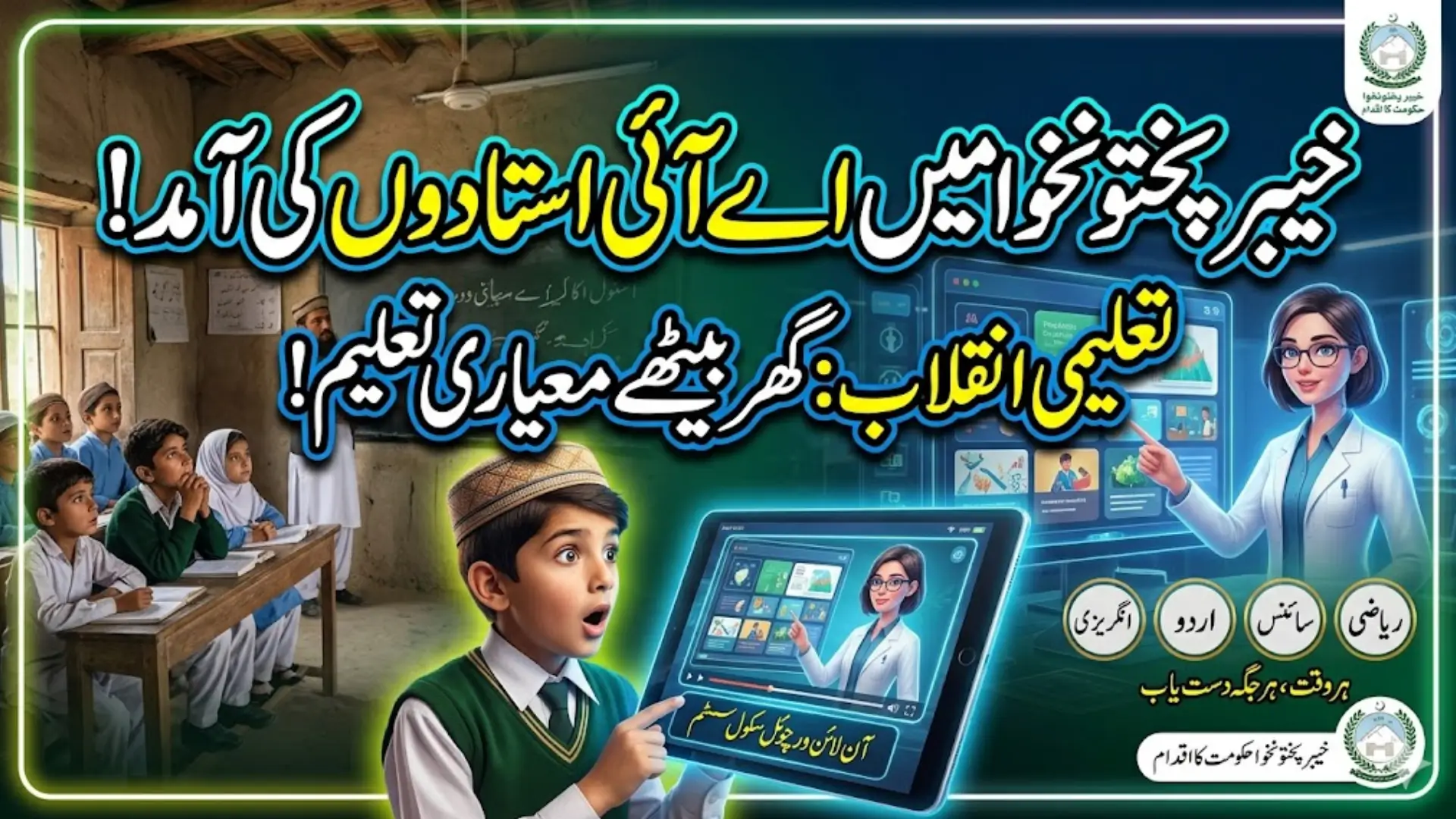
The AI Virtual School System in Khyber Pakhtunkhwa marks a major step toward modernizing education in Pakistan. This innovative initiative introduces artificial intelligence into the public education sector, aiming to improve access, quality, and efficiency of learning across the province. By using advanced technology, the government is working to ensure that every student, regardless of location, gets a chance to receive quality education.
Introduction to AI Virtual School System in Khyber Pakhtunkhwa
The AI Virtual School System in Khyber Pakhtunkhwa is designed to bring digital transformation to traditional classrooms. The main goal of this project is to make education more accessible and effective by integrating AI-powered teaching methods.
This system allows students to attend classes online while benefiting from modern tools such as recorded lectures and interactive sessions. It is especially helpful for students who cannot attend physical schools due to distance or other challenges.
Government Approval and Leadership Initiative
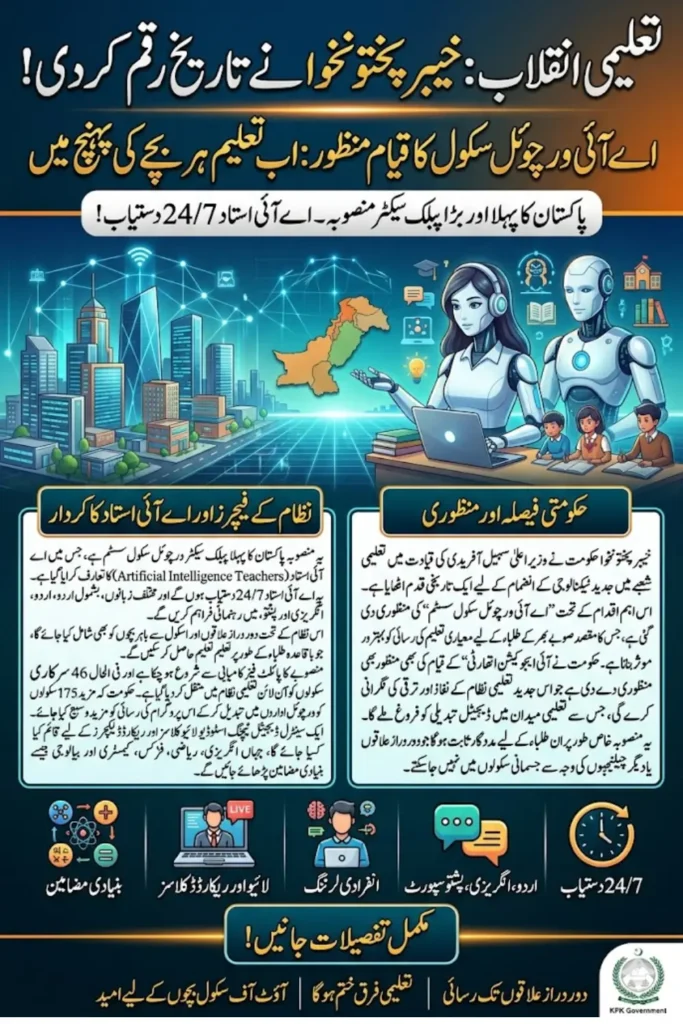
The project has been approved under the leadership of Chief Minister Sohail Afridi, who chaired an important meeting of the Elementary and Secondary Education Department. During this meeting, key decisions were made to push forward the digital education agenda.
In addition, the government has given in-principle approval to establish an AI Education Authority. This authority will oversee the implementation and development of the AI Virtual School System in Khyber Pakhtunkhwa, ensuring that all formalities are completed efficiently.
Launch of Pakistan’s First Public Sector Virtual School System
This initiative is Pakistan’s first public sector virtual school system powered by artificial intelligence. It introduces AI teachers into classrooms, which is a significant shift from traditional teaching methods.
The AI Virtual School System in Khyber Pakhtunkhwa is focused on using innovation to enhance the learning experience. With AI technology, students can receive consistent and high-quality instruction at any time.
Inclusion of Students in the Virtual System
One of the most important features of the AI Virtual School System in Khyber Pakhtunkhwa is inclusivity. Students studying through virtual platforms will be treated as regular students.
This includes overseas Pakistanis and children who are currently out of school. By bringing these groups into the education system, the initiative is helping to reduce the number of uneducated children and expand learning opportunities.
Pilot Phase and Current Implementation
The project has already entered its pilot phase, showing promising progress. So far, 46 government schools have been shifted to the online education system.
Out of these, 33 schools are located in settled districts, while 13 are in merged districts. This initial rollout is helping authorities test the system and make improvements before expanding it further.
Expansion Plan of the Project
The government plans to expand the AI Virtual School System in Khyber Pakhtunkhwa by converting 175 more schools into virtual institutions.
This expansion will significantly increase the reach of the program and ensure that more students benefit from digital education. It also reflects the long-term vision of building a strong and modern education system in the province.
Features of the AI Virtual School System
The project includes a central digital teaching studio equipped with advanced technology. This studio is used for conducting live interactive classes and recording lectures for students.
Students are currently being taught subjects such as English, Mathematics, Physics, Chemistry, and Biology. These core subjects are essential for building a strong academic foundation.
Role of AI Teacher in Education
The AI teacher is one of the most innovative aspects of the AI Virtual School System in Khyber Pakhtunkhwa. It is available 24/7 and supports multiple languages, including Urdu, English, and Pashto.
This system allows students to learn at their own pace and receive personalized support. It also reduces the workload on human teachers, enabling them to focus on more complex teaching tasks. Overall, it helps improve the quality of education.
Budget and Financial Details
The total cost of the project is Rs153.8 million, showing the government’s strong commitment to improving education through technology.
Out of this amount, Rs44.85 million has been allocated for establishing a tele-education hub. This hub will play a key role in delivering online education and supporting the virtual school system.
Impact on Remote and Underserved Areas
The AI Virtual School System in Khyber Pakhtunkhwa is expected to bring major benefits to students in remote and underserved areas. These regions often face a shortage of qualified teachers and proper educational facilities.
By using AI and digital tools, the project ensures that students in these areas can access the same quality of education as those in urban centers. This will help bridge the educational gap and promote equal opportunities.
Conclusion
The AI Virtual School System in Khyber Pakhtunkhwa is a groundbreaking initiative that has the potential to transform education in Pakistan. By combining technology with education, the government is creating new opportunities for students across the province.
With its focus on accessibility, quality, and innovation, this program is set to become a model for future educational reforms. It not only addresses current challenges but also prepares the education system for a more digital and connected future.
BISP Installment Update 2026 – Latest Payment Schedule, Eligibility and New Changes