
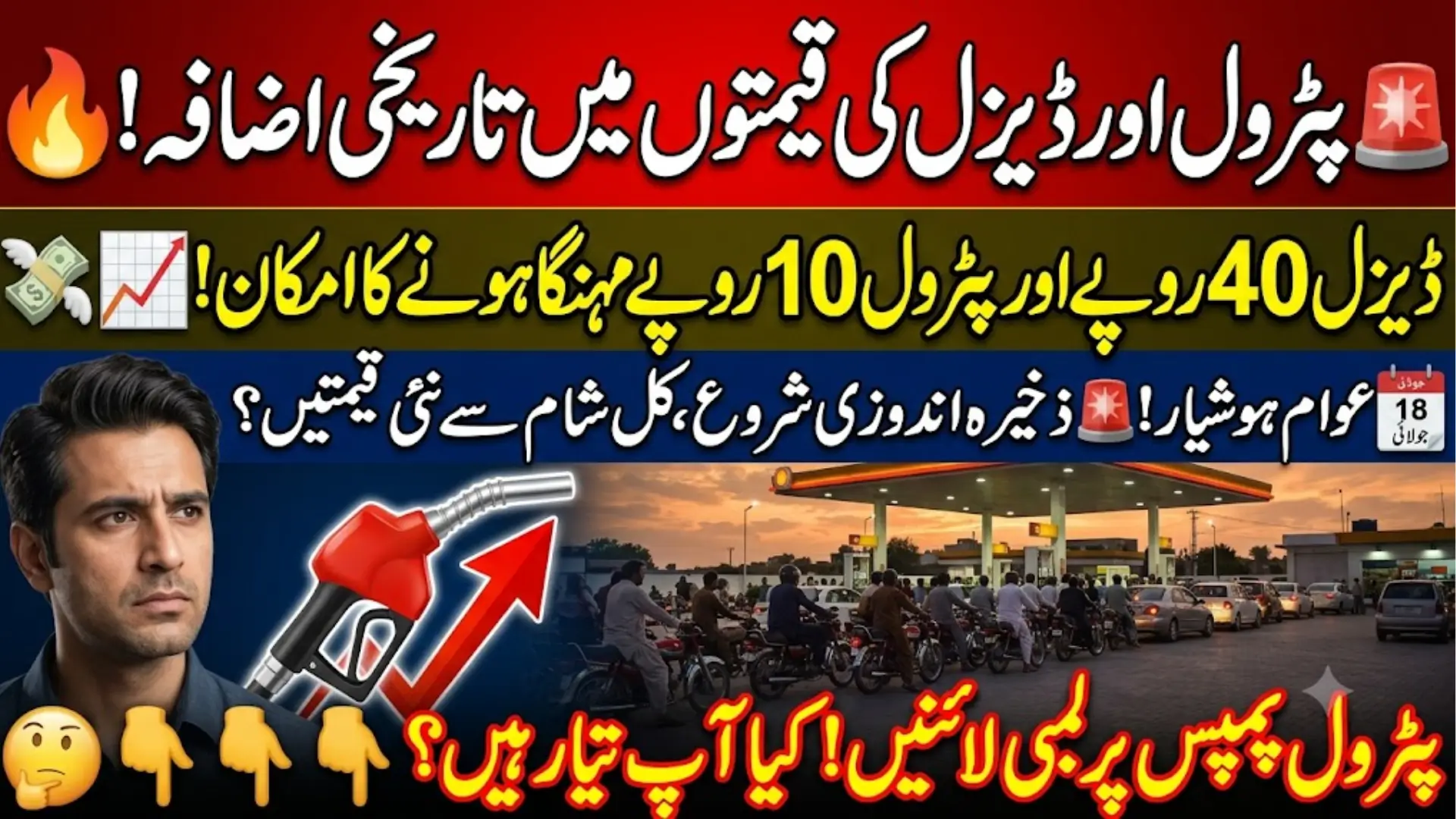
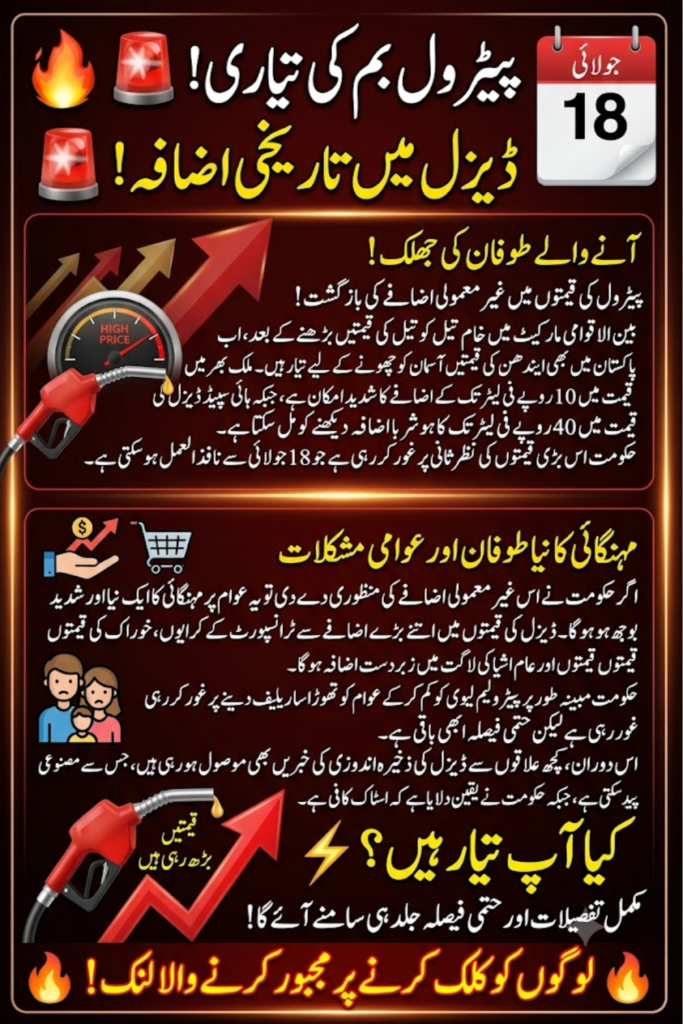
The Petrol Price in Pakistan is expected to increase in the upcoming fortnightly fuel price review, with revised rates likely to take effect from July 18. According to preliminary estimates, petrol could become around Rs. 10 per litre more expensive, while high-speed diesel (HSD) may witness a much larger increase of up to Rs. 40 per litre.
The expected hike comes after a rise in international oil prices, which has increased the cost of importing petroleum products. Although the final prices have not yet been announced, government officials are considering measures to reduce the financial burden on consumers.
In addition to the expected increase, authorities are also monitoring reports of diesel hoarding in some areas and have assured the public that petroleum stocks across the country remain sufficient.
Expected Petrol and Diesel Price Increase
The upcoming fuel price review is likely to bring higher prices for both petrol and diesel across Pakistan.
According to initial estimates:
- Petrol may increase by approximately Rs. 10 per litre.
- High-Speed Diesel (HSD) could rise by up to Rs. 40 per litre.
If approved, the revised Petrol Price in Pakistan will come into effect from July 18 under the government’s regular fortnightly pricing mechanism.
The final decision will depend on the official review conducted by the relevant authorities before the announcement.
Why Are Fuel Prices Expected to Increase?
The main reason behind the expected increase in the Petrol Price in Pakistan is the recent rise in international crude oil prices.
Pakistan imports a significant portion of its petroleum products. When global oil prices increase, the cost of importing fuel also rises. As a result, local fuel prices are adjusted to reflect these higher import costs.
The latest increase in global petroleum prices has placed pressure on domestic fuel pricing, leading to expectations of another upward revision for both petrol and diesel.
Government Considering Relief Through Petroleum Levy
To reduce the impact of higher fuel prices on the public, the government is reportedly considering lowering the petroleum levy.
Reducing the levy could help offset part of the expected increase and provide some financial relief to consumers. However, no final decision has been announced yet.
The government is expected to finalize all pricing adjustments before the revised fuel prices become effective on July 18.
Reports of Diesel Hoarding Before Price Hike
As news of a possible fuel price increase spread, reports emerged of diesel hoarding in several areas.
Some filling stations temporarily experienced diesel shortages as dealers and distributors were suspected of storing fuel ahead of the expected price hike.
Officials noted that petroleum product sales during the first half of July were significantly higher than normal. This unusual increase in demand raised concerns that some businesses were stockpiling diesel in anticipation of higher prices.
Authorities are closely monitoring the situation to prevent artificial shortages in the market.
NCMC Reviews Fuel Supply Situation
The fuel supply situation was reviewed during a meeting of the National Committee on Monitoring and Coordination (NCMC).
The meeting included representatives from:
- Oil Companies Advisory Council (OCAC)
- Oil and Gas Regulatory Authority (OGRA)
- Other relevant government departments
Officials discussed market conditions, fuel availability, and the reports of increased diesel demand.
According to the committee, the unusual rise in petroleum sales may be linked to speculative buying and hoarding before the expected price revision.
OGRA to Increase Market Monitoring
Following the review meeting, the Oil and Gas Regulatory Authority (OGRA) was directed to strengthen market surveillance across the country.
Authorities have been instructed to:
- Monitor fuel supply more closely.
- Take action against hoarding and speculative practices.
- Prevent artificial shortages at fuel stations.
- Ensure fair distribution of petroleum products.
Provincial governments have also been asked to conduct inspections and take legal action against anyone found disrupting normal fuel supplies.
These measures aim to maintain market stability during the upcoming fuel price adjustment.
Pakistan Has Sufficient Petroleum Stocks
Despite reports of temporary shortages at some filling stations, government officials have reassured the public that Pakistan has adequate petroleum reserves.
According to officials, national fuel inventories are sufficient to meet current demand, and there is no shortage of petroleum products at the national level.
Oil marketing companies have been instructed to maintain uninterrupted fuel supplies throughout the country to ensure consumers continue to receive fuel without disruption.
The government has also urged citizens to avoid panic buying, stating that fuel supplies remain stable.
What Consumers Should Expect Next
Consumers should now wait for the official announcement of the revised Petrol Price in Pakistan, which is expected to take effect from July 18.
While preliminary estimates suggest a notable increase in both petrol and diesel prices, the final rates may vary depending on the government’s decision regarding petroleum levy adjustments and other pricing factors.
Until the official notification is issued, consumers are advised not to rely on rumors or engage in unnecessary fuel stockpiling.
Final Thoughts
The Petrol Price in Pakistan is expected to increase from July 18, with petrol likely to become around Rs. 10 per litre more expensive and high-speed diesel potentially increasing by up to Rs. 40 per litre. The expected hike is mainly driven by rising international oil prices, while the government is exploring options to reduce the impact on consumers through adjustments to the petroleum levy.
At the same time, authorities have stepped up monitoring efforts to prevent fuel hoarding and ensure uninterrupted supplies across the country. Officials continue to assure the public that petroleum stocks remain sufficient and have advised consumers to wait for the official announcement rather than panic buying.
As always, the final Petrol Price in Pakistan will be confirmed through the government’s official notification before the revised rates become effective on July 18.
Parwaaz Card 2026 vs Hunarmand Naujawan Scheme – Which Program Is Right for You