Pakistan Digital Hajj Portal Collects
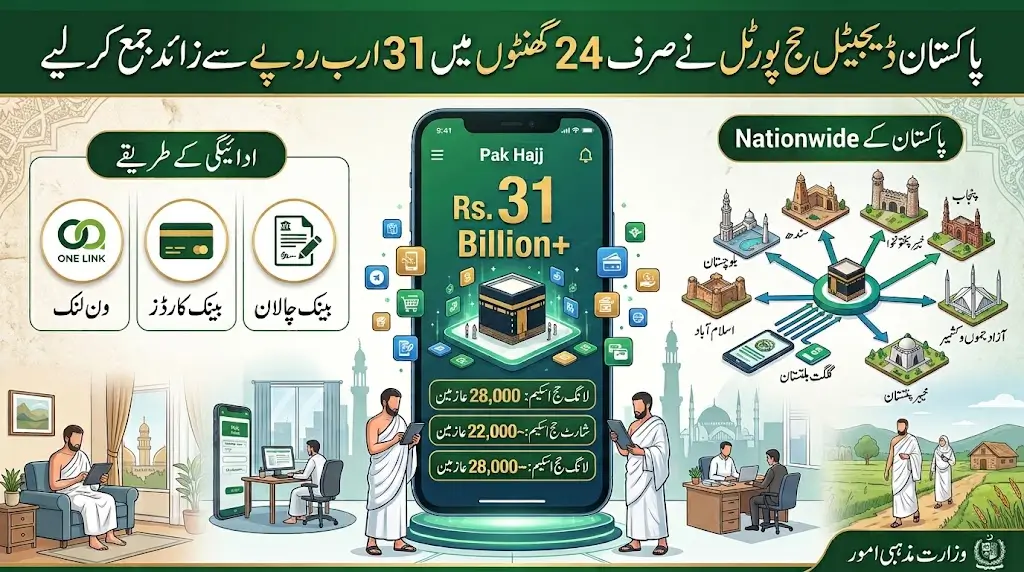
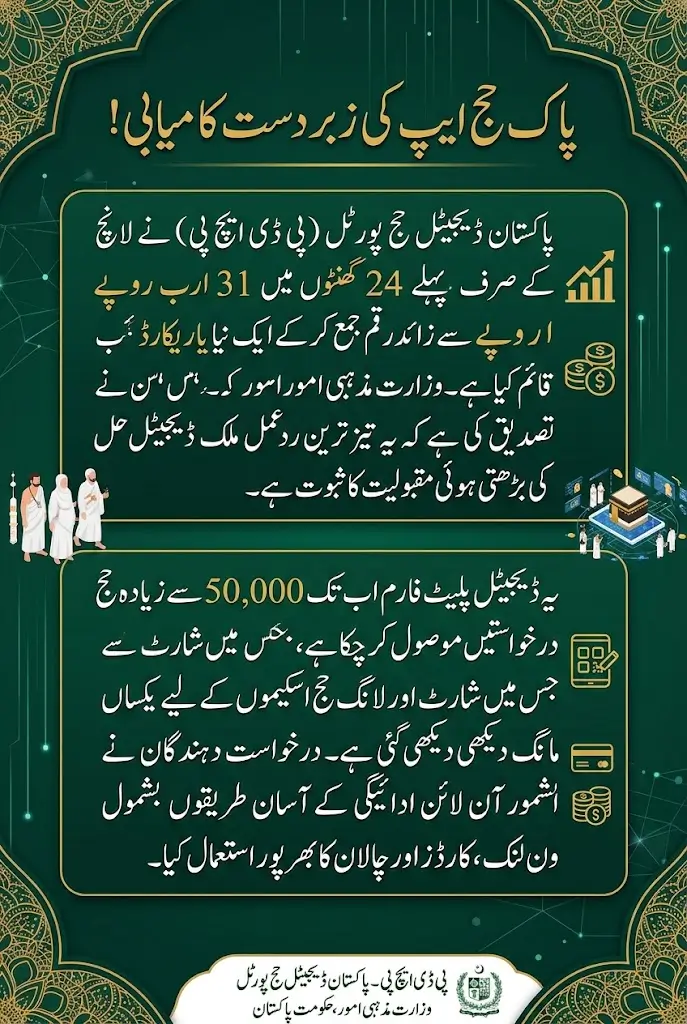
Pakistan Digital Hajj Portal Collects Pakistan’s move toward a fully digital Hajj application system appears to be paying off quite literally. Within a single 24-hour window, the country’s online Hajj portal recorded payments exceeding Rs. 31 billion, a figure confirmed by the Ministry of Religious Affairs. For a government-run digital service, that kind of uptake in such a short span is hard to ignore.
A Fast Start for the Online Payment System
Since the online payment option went live, applications submitted through the portal have crossed the 50,000 mark. That’s a significant number for a system that, until recently, required pilgrims to rely on physical bank visits and paperwork to complete their Hajj payments.
Breaking the numbers down, close to 22,000 pilgrims have completed payments under the Short Hajj Scheme, while roughly 28,000 pilgrims have done so under the Long Hajj Scheme. Together, these figures suggest that both scheme categories are seeing healthy, near-simultaneous demand — not one option overshadowing the other.
Nationwide Participation, Not Just Major Cities
What stands out about this rollout is its reach. Payments aren’t limited to Pakistan’s big urban centers. According to the Ministry, transactions are coming in from all four provinces, as well as Azad Jammu and Kashmir, Gilgit-Baltistan, and Islamabad. That’s essentially nationwide coverage, which suggests the Pak Hajj app and web portal are accessible enough for pilgrims in smaller towns and remote regions to use without major hurdles.
How Pilgrims Are Paying
The Ministry has kept the payment process flexible by offering three distinct methods through the Pak Hajj app and the Hajj portal:
- One Link — a widely used interbank payment gateway in Pakistan
- Bank cards — for direct debit or credit card transactions
- Bank challans — for those who prefer a more traditional, receipt-based payment route
This mix means pilgrims aren’t forced into a single digital channel. Someone comfortable with card payments can use that option, while a person who trusts the conventional challan system still has that choice available. It’s a practical way to bring digital convenience to a user base that varies widely in age, location, and familiarity with online banking.
Why This Matters
Hajj arrangements have historically involved long queues, manual verification, and delays often adding stress to what is already a significant financial and spiritual commitment for families. By shifting payments online, the Ministry of Religious Affairs is aiming to cut down processing time, reduce paperwork, and give pilgrims more control over how and when they pay.
The early numbers over Rs. 31 billion collected in a day and 50,000-plus applications processed indicate that pilgrims are responding well to this shift. If this pace continues, it could set a precedent for how other government services in Pakistan handle large-scale, time-sensitive transactions in the future.
The Bigger Picture
Digitizing the Hajj payment process isn’t just about convenience it’s part of a broader push to modernize how public services operate in Pakistan. A faster, more transparent payment system benefits not only pilgrims but also the Ministry itself, which gains better visibility into applications, reduces the risk of manual errors, and can respond more quickly to demand across different regions.
Pakistan Digital Hajj Portal Collects As the Hajj season approaches, it will be worth watching whether application numbers continue climbing at this rate, and whether the Ministry expands digital options further to accommodate even more pilgrims in the years ahead.
Also Read Article Link Here: E Taxi Scheme CM Punjab – Complete Guide for 2026 Applicants