
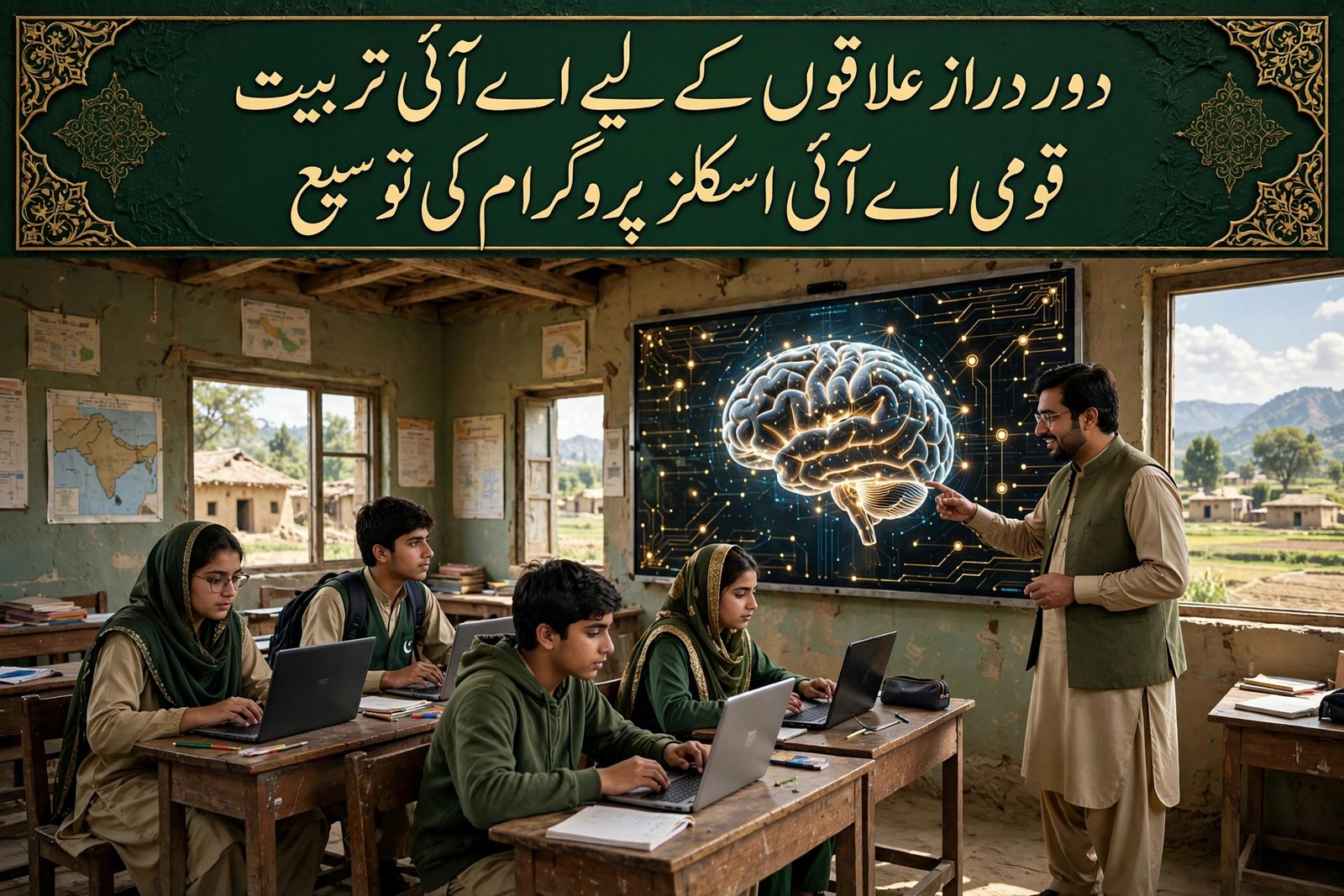
The Ministry of Information Technology and Telecommunication (MoITT) plans to expand the National AI Skills Program to rural, remote, and underserved areas, giving more young people access to training in artificial intelligence and other emerging technologies.
The proposed expansion aims to improve employment opportunities and digital inclusion while developing skills in areas including artificial intelligence, blockchain, quantum computing, cybersecurity, and cloud computing.
AI Training Expansion: Key Details
| Detail | Information |
|---|---|
| Program | National AI Skills Program (expansion to remote areas) |
| Ministry | Ministry of IT and Telecommunication |
| Target areas | Rural, remote, and underserved areas of Pakistan |
| Skills covered | AI, blockchain, quantum computing, cybersecurity, cloud computing |
| Policy target | One million IT graduates trained over five years (AI Policy 2025) |
| Trainer target | 10,000 trainers equipped with emerging technology skills by 2027 |

Why Remote Areas?
The ministry has identified limited training facilities, poor internet connectivity, a shortage of qualified instructors, and low awareness as key barriers in underserved areas. Proposed measures to overcome them include regional training hubs, online and hybrid learning, university and industry partnerships, mobile training facilities, and scholarships for women and disadvantaged groups.
The government may conduct a nationwide needs assessment to identify underserved regions and priority skills before developing a phased expansion plan.
What Is Already Running?
The government is already running several training initiatives, including the National Artificial Intelligence Initiative, DigiSkills, Code4AI, the National AI Innovation Hub, and certification programs for government employees. More than 900,000 training sessions were delivered through DigiSkills during the fiscal year 2025-26.
Under AI Policy 2025, the government plans to train one million new and existing IT graduates in IT and related technologies over five years. It also aims to equip 10,000 trainers with emerging technology skills by 2027.
Who Will Benefit?
- Youth in rural and remote areas who currently lack access to advanced training facilities.
- Women and disadvantaged groups, through dedicated scholarships.
- Existing IT graduates looking to upgrade their skills in AI, cybersecurity, and cloud computing.
- Local communities, as trained youth bring digital income opportunities back to their regions.
FAQs About the AI Training Expansion
What is the National AI Skills Program expansion?
The Ministry of IT plans to extend the National AI Skills Program to rural, remote, and underserved areas so that more young people can train in AI and emerging technologies.
Which technologies will be taught?
The program covers artificial intelligence, blockchain, quantum computing, cybersecurity, and cloud computing.
What are the targets under AI Policy 2025?
The government aims to train one million new and existing IT graduates over five years and equip 10,000 trainers with emerging technology skills by 2027.
What challenges exist in remote areas?
Limited training facilities, poor internet connectivity, a shortage of qualified instructors, and low awareness are the main barriers the ministry has identified.
How will the government overcome these challenges?
Proposed measures include regional training hubs, online and hybrid learning, university and industry partnerships, mobile training facilities, and scholarships for women and disadvantaged groups.
When will the expansion begin?
The government may first conduct a nationwide needs assessment to identify underserved regions and priority skills, followed by a phased expansion plan.
Final Thoughts
Expanding AI training to remote and underserved areas could be a game-changer for digital inclusion in Pakistan, bringing high-value skills — and the jobs that come with them — to young people far beyond the big cities.
For more youth and education updates, also read our article on NUMS Postgraduate Admissions Spring 2027.