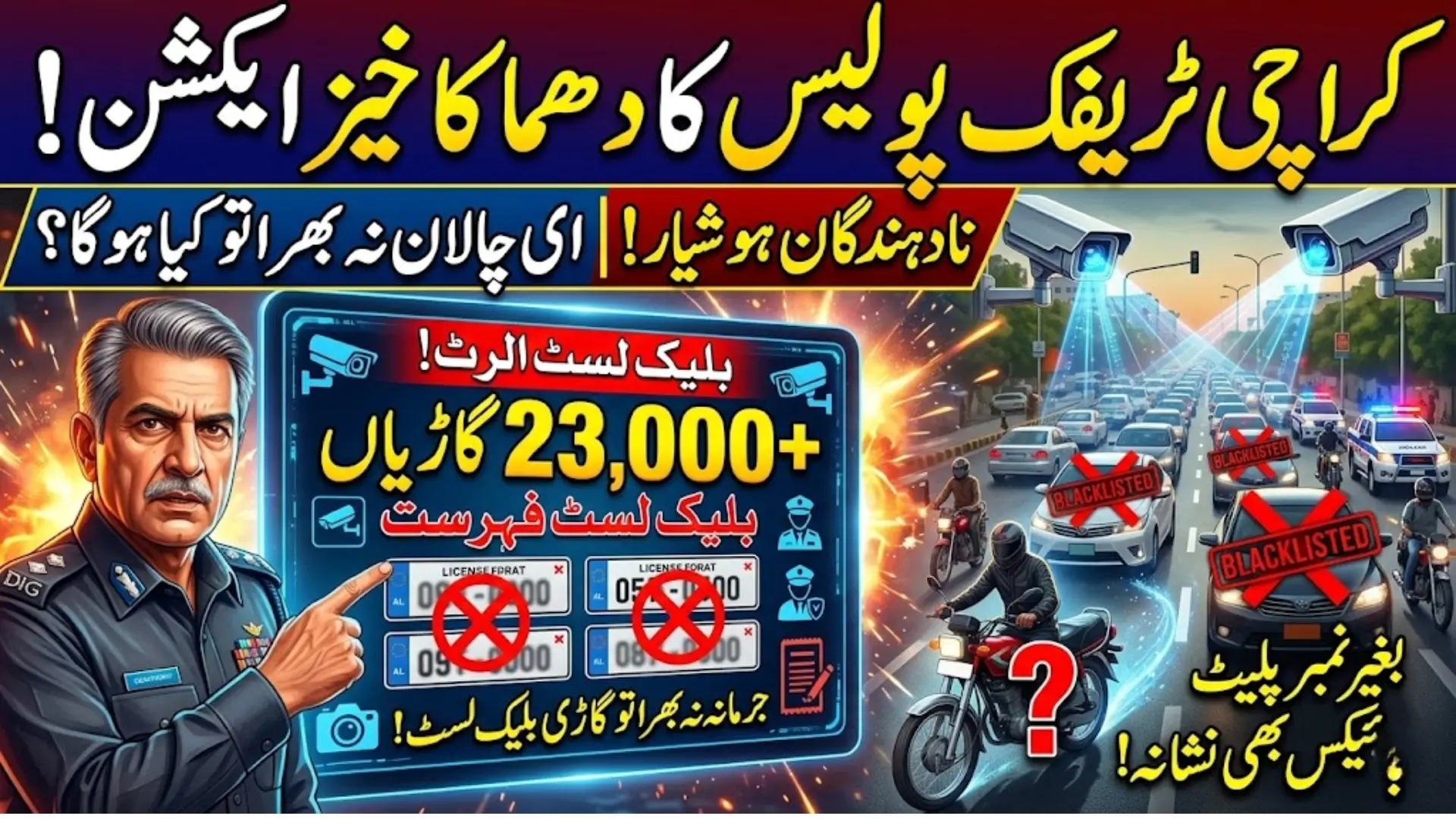
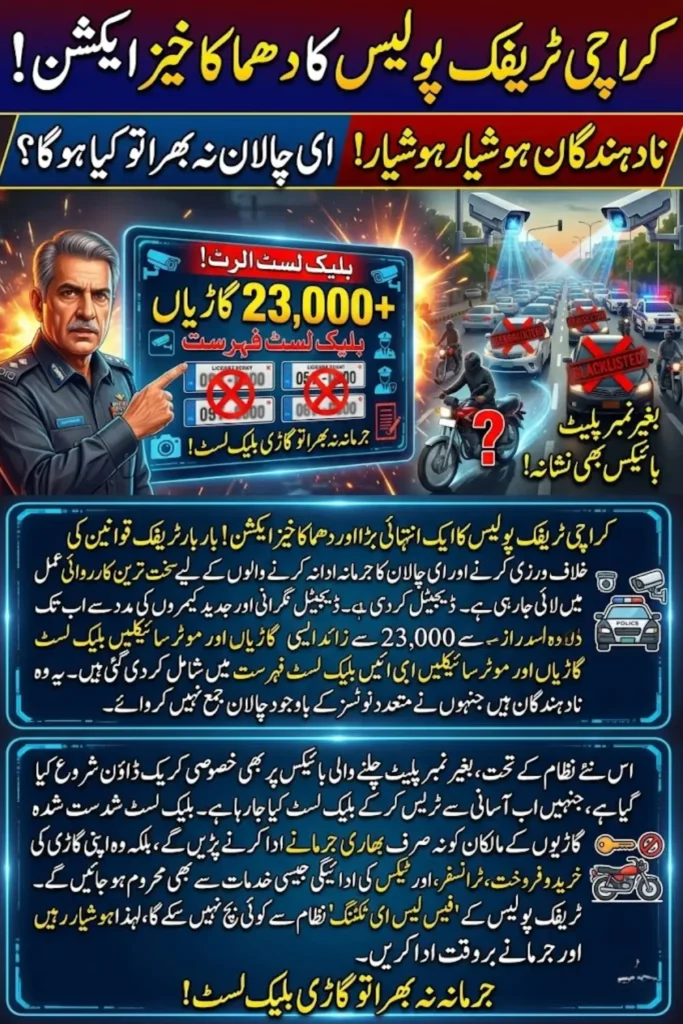
Karachi Traffic Police E-Challans Blacklist. The issue of unpaid traffic fines is becoming a serious concern in Karachi. The Karachi traffic police e-challans blacklist has recently made headlines after authorities revealed that more than 23,000 vehicles have been blacklisted for repeatedly failing to pay their fines. This step reflects a stricter approach toward enforcing traffic laws and improving discipline on the roads.
Launch of the E-Challan System
To modernize traffic law enforcement, the Traffic Regulation and Citation System (TRACS) was launched on October 27, 2025. This electronic ticketing system was designed to reduce human involvement and bring transparency to the process.
Through this system, traffic violations are recorded digitally, and e-challans are issued directly to vehicle owners. The goal is to ensure fair enforcement and make it easier for citizens to track and pay their fines.
Major Statistics
Since its launch, the system has shown significant activity. Officials reported that over 600,000 e-challans have been issued in Karachi. However, a large number of violators have failed to pay their fines.
As a result, more than 23,000 vehicles have now been added to the Karachi traffic police e-challans blacklist. These vehicles were repeatedly involved in violations and ignored multiple notices, leading authorities to take stricter action.
Official Review Meeting
A high-level meeting was held to review the performance of the system and overall traffic management. The meeting was chaired by the Inspector General of Sindh Police, while senior traffic officials also participated.
During the session, traffic authorities presented detailed data on e-challans and enforcement actions. The performance of the faceless e-ticketing system was discussed, and officials emphasized the need for stronger compliance.
Blacklisting Policy and Enforcement
The Karachi traffic police e-challans blacklist is part of a broader strategy to deal with repeat offenders. Vehicles are added to this list if their owners consistently fail to pay fines despite multiple violations.
This measure aims to increase accountability among drivers, encourage timely payment of fines, and reduce repeated traffic violations. Blacklisted vehicles may face restrictions or legal action, making it difficult for owners to avoid penalties any longer.
Planned Crackdown After Eid ul Fitr
Authorities have also announced a major crackdown after Eid ul Fitr. This operation will specifically target motorcycles without number plates, which are often involved in traffic violations and are difficult to trace.
This step is expected to strengthen the impact of the Karachi traffic police e-challans blacklist and improve overall law enforcement on the roads.
Concern Over Rising Traffic Accidents
Another important issue highlighted during the meeting was the increasing number of traffic accidents in the city. The Inspector General took serious notice of this trend and directed officials to prepare a detailed report.
The report will focus on identifying the main causes of accidents, suggesting preventive measures, and improving road safety strategies. This shows that authorities are not only focusing on fines but also on saving lives.
Traffic Management During Ramadan
Despite these challenges, traffic arrangements during Ramadan were described as satisfactory. Authorities managed traffic flow effectively during peak hours, especially around busy markets and mosques.
Officials also stated that efforts are ongoing to improve public convenience, enhance traffic systems, and expand management services across the city.
Conclusion
The Karachi traffic police e-challans blacklist marks a significant step toward stricter traffic law enforcement. With over 23,000 vehicles already blacklisted, authorities are sending a clear message that repeated violations and non-payment of fines will not be tolerated.
As new crackdowns and safety measures are introduced, citizens are encouraged to follow traffic rules and pay their fines on time. These efforts are essential for creating safer roads and a more organized traffic system in Karachi.