

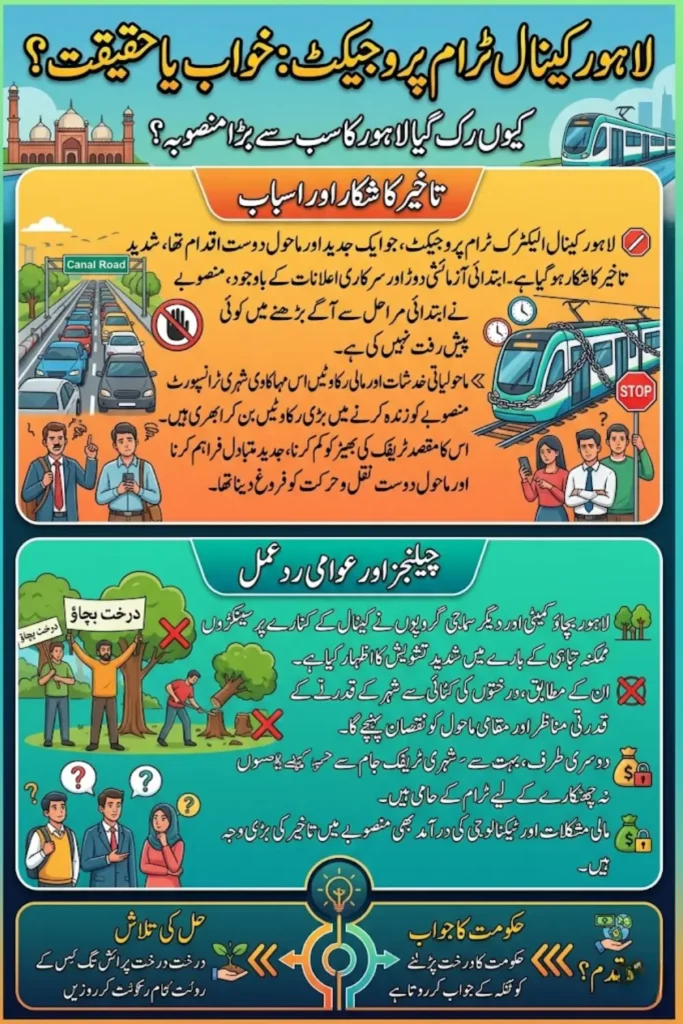
The Lahore Canal Electric Tram Project, initially launched as a modern and eco-friendly transport initiative, has experienced significant delays. Despite an early trial run and official announcements, the project has yet to progress beyond preliminary stages. Environmental concerns and financial constraints have emerged as major hurdles in bringing this ambitious urban transport plan to life.
Purpose and Scope of the Project
The project was designed to introduce a sustainable tram system along Lahore’s canal corridor, connecting key routes across the city. The main objectives include reducing traffic congestion, offering a modern alternative to conventional public transport, and promoting environmentally friendly mobility.
Once operational, the tram is expected to carry over 300 passengers along a dedicated 27-kilometer track with multiple stations. Authorities initially projected the system could be completed within a year after final approval.
Environmental Concerns
Environmental opposition has become a central challenge for the project. The Lahore Bachao Committee and other civic groups have raised concerns about the potential destruction of hundreds of mature trees along the canal. They argue that cutting these trees could damage the city’s natural landscape and disrupt local ecosystems.
To address these concerns, the government is exploring alternative routes and compensatory measures, such as tree plantation programs. The project remains under review to ensure environmental sustainability while moving forward.
Public Opinion
While environmental groups express caution, many residents have voiced support for the tram system. Commuters have highlighted growing traffic congestion and inadequate public transport as reasons why the tram could greatly improve daily travel. Citizens anticipate that the system would provide a convenient, reliable, and modern alternative for city commuting.
Financial and Technical Challenges
The Lahore Canal Electric Tram Project faces significant financial and technical barriers. Key expenses include the construction of dedicated tracks, development of stations, and procurement of electric trams, which are expected to be imported from China and some European countries.
Delays have occurred due to both budgetary limitations and technical complexities in setting up an efficient and safe tram system. Authorities are reviewing cost-effective strategies and technical solutions to overcome these challenges.
Project Specifications
The planned tram system features a dedicated 27-kilometer track along the canal corridor. It will include multiple stations strategically located to serve high-traffic areas, with a capacity of transporting more than 300 passengers per trip. Officials confirm that the timeline for completion remains approximately one year after the final approval, pending resolution of current environmental and financial issues.
Government Response
Transport department officials have clarified that the Lahore Canal Electric Tram Project has not been shelved. Instead, it is under careful review to address both environmental and technical concerns. Measures such as alternative routing and compensatory tree plantation are being considered to ensure that the project is implemented sustainably while meeting modern transport needs.
Conclusion
The Lahore Canal Electric Tram Project represents a crucial step toward modern, eco-friendly urban transport in Lahore. While environmental concerns and financial challenges have delayed progress, careful planning and adjustments could allow the project to move forward responsibly. Balancing sustainable development with efficient city mobility remains the key to the tram’s eventual success, promising a greener and more convenient transport option for Lahore’s residents.
Motorcycle Transfer Fee Waived in Islamabad: One-Month Relief Initiative by Mohsin Naqvi