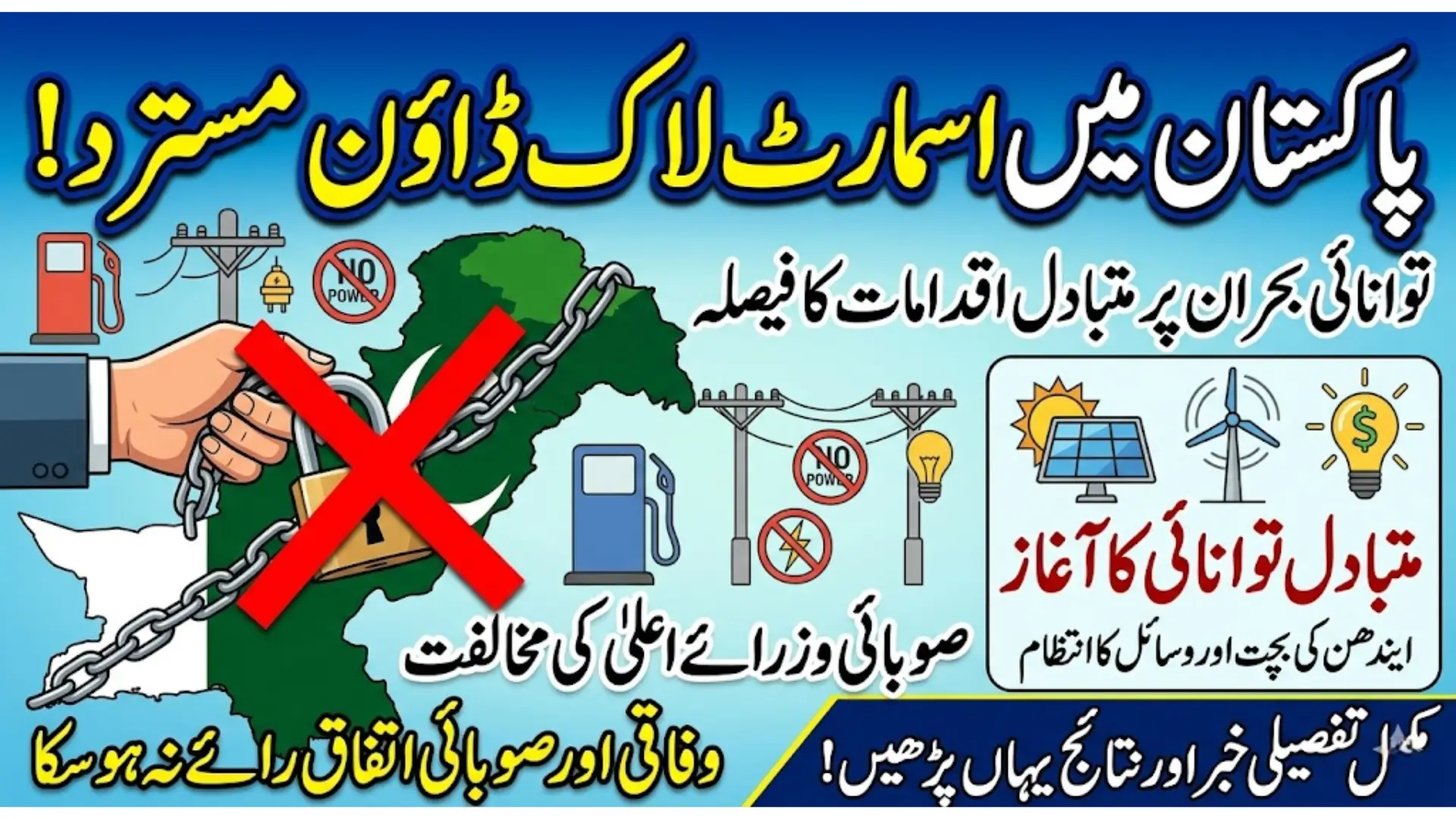
The issue of a Smart Lockdown in Pakistan has recently been at the center of government discussions amid the ongoing energy crisis and regional tensions affecting fuel supplies. Authorities were considering strict measures to conserve energy and manage limited resources. However, after detailed consultations, a final decision has been made on implementing a smart lockdown.
Government’s Final Decision
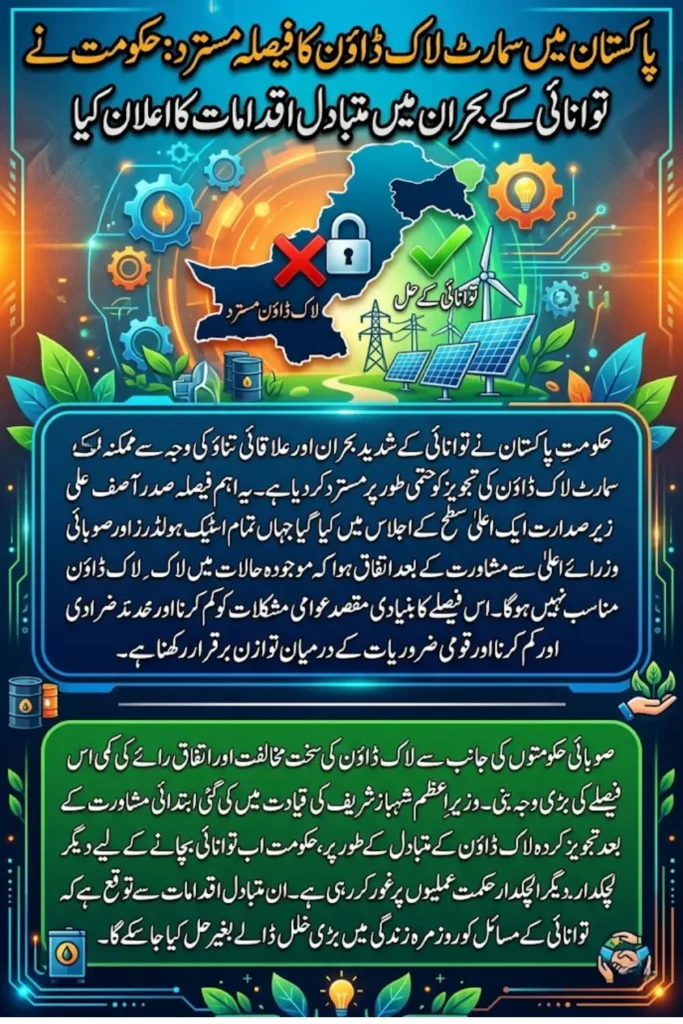
The government has decided not to impose a Smart Lockdown in Pakistan. This decision was taken during an important meeting chaired by President Asif Ali Zardari. After reviewing the situation and consulting all stakeholders, it was agreed that enforcing a smart lockdown at this stage would not be suitable.
This decision reflects the government’s effort to balance public convenience with national needs.
Opposition from Provinces
One of the major reasons behind rejecting the Smart Lockdown in Pakistan was strong opposition from the provinces. The chief ministers of all four provinces did not support the proposal.
Their concerns played a key role in shaping the final decision. Since provincial cooperation is essential for implementing such policies, the lack of agreement made it difficult to move forward.
Failure to Reach Agreement
Due to differences among federal and provincial authorities, no consensus could be reached on the Smart Lockdown in Pakistan. The proposal was mainly aimed at conserving energy, but without mutual agreement, it could not be implemented.
This situation highlights the importance of unity and coordination when making nationwide decisions.
Shift to Alternative Measures
Instead of enforcing a Smart Lockdown in Pakistan, the government has decided to explore alternative solutions. These measures are expected to address the energy crisis without disrupting daily life as much as a lockdown would.
The focus will now be on managing resources efficiently while minimizing inconvenience for the public.
Earlier Proposed Smart Lockdown Plan
Before rejecting the idea, the government had prepared a detailed plan for a Smart Lockdown in Pakistan. According to the proposal, a nationwide lockdown was to be implemented on weekends, specifically on Saturdays and Sundays.
The suggested timing was from Saturday at 12:00 PM until Sunday at 11:59 PM. The proposal had reportedly been approved after consultations led by Prime Minister Shehbaz Sharif.
Proposed Restrictions Under Lockdown
If the Smart Lockdown in Pakistan had been implemented, several restrictions would have been enforced. All business activities were to be suspended during the lockdown period.
Markets, commercial centers, and wedding events were also planned to be completely banned during these days. These steps were designed to reduce energy consumption and control unnecessary activities.
Essential Services Exemptions
Despite the restrictions, the proposal included certain exemptions to ensure public convenience. Public transport was planned to remain operational even during the lockdown.
Hospitals, pharmacies, and other essential public services were also allowed to stay open. This approach aimed to maintain essential services while limiting non-essential activities.
Conclusion
The decision to reject the Smart Lockdown in Pakistan shows the importance of consensus in national policymaking. While the government initially considered strict measures to tackle the energy crisis, it ultimately chose a more flexible approach due to provincial concerns.
Moving forward, the government is expected to focus on alternative strategies that ensure energy conservation without major disruptions. This balanced approach may help address current challenges while maintaining stability in daily life.
NADRA CNIC Renewal Deadline: Citizens Urged to Renew Expired Identity Cards Before June 30, 2026