
NADRA New QR Code-Based CNIC
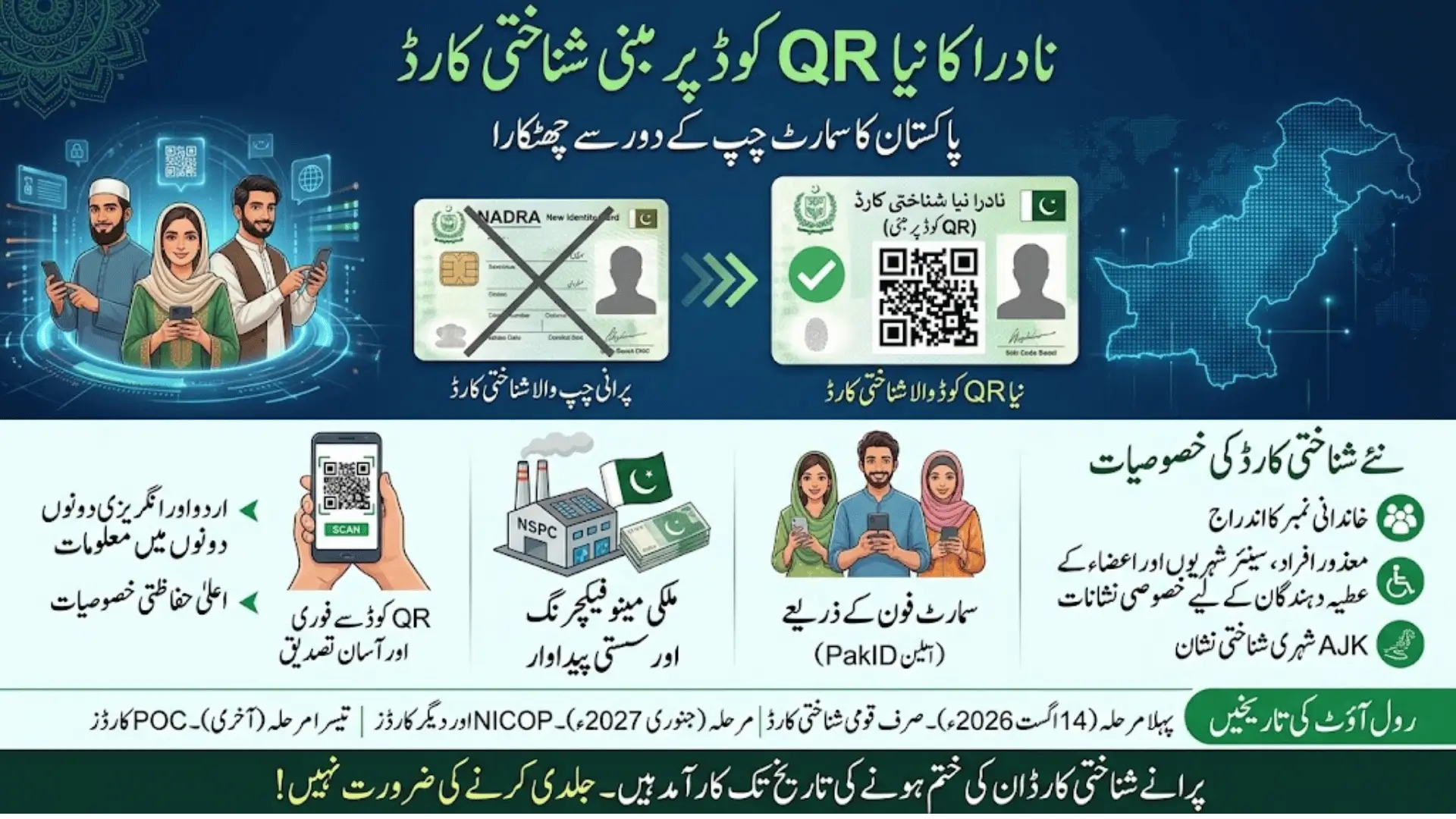
NADRA New QR Code-Based CNIC. Pakistan’s national identity card system is undergoing its biggest transformation in over a decade. NADRA (National Database and Registration Authority) has officially rolled out a redesigned National Identity Card that ditches the embedded microchip in favor of a secure, smartphone-scannable QR code a shift that promises faster verification, lower production costs, and a fully homegrown manufacturing process.
Here’s everything you need to know about the new chipless CNIC, why NADRA made the switch, and what it means for you.
Why Is NADRA Replacing the Chip with a QR Code?
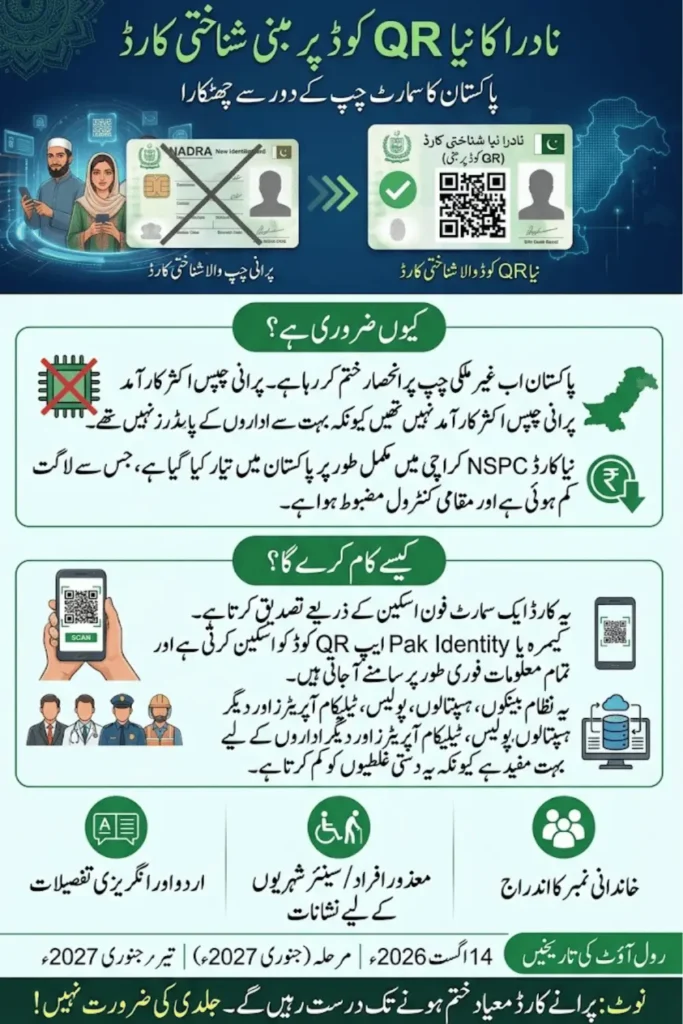
For nearly 14 years, Pakistan’s Smart National Identity Card relied on an embedded microchip imported from abroad. In theory, the chip was meant to store and transmit identity data electronically at the point of verification. In practice, most government departments, banks, and service providers never had the chip readers or infrastructure needed to actually use it. The feature existed on paper but rarely functioned in day-to-day life.
NADRA’s new design solves that problem in a much simpler way: instead of specialized hardware, the card now carries a secure QR code that can be scanned with any ordinary smartphone camera. No special reader, no extra equipment just a phone and the right app.
The redesigned card is manufactured entirely in Pakistan by the National Security Printing Company (NSPC) in Karachi, built to NADRA’s technical and security specifications. That means the country is no longer dependent on foreign chip suppliers, which cuts costs and strengthens local control over a critical piece of national infrastructure.
How Does the QR Code Verification Work?
The QR code embedded on the new card stores the cardholder’s essential identity details along with their photograph. Verification is done through the Pak Identity (PakID) mobile application, which reads the code and instantly confirms the person’s identity.
This system is designed to benefit a wide range of institutions that regularly need to verify identity, including:
- Telecom operators (for SIM registration and verification)
- Banks and financial institutions
- Hospitals
- Pakistan Railways
- Police departments
- Other authorized government and private entities
These organizations will be equipped with dedicated software to scan and validate the QR code, either through a smartphone or a camera connected to their existing systems. Because the code can be read digitally, institutions can pull names, addresses, and other identity details directly into their databases, cutting down on manual data-entry mistakes that are common when staff type information by hand.
What’s New on the Card Itself?
Beyond the shift from chip to QR code, the redesigned CNIC includes several practical updates:
- Family number displayed on the card
- Special symbols identifying persons with disabilities, senior citizens, and organ donors
- AJK citizen identifier for residents of Azad Jammu and Kashmir
- Bilingual details the cardholder’s name and address now appear in both Urdu and English
- Upgraded security features, both visible and covert, aligned with Pakistan’s current manufacturing standards
These additions make the card more informative at a glance while also making it harder to forge or tamper with.
When Does the Rollout Happen?
The Federal Government approved the new card design on 23 February 2026, and NADRA is introducing it in phases rather than all at once:
Phase 1 — Starting 14 August 2026: The QR code-based card will initially replace only the standard National Identity Card (CNIC).
Phase 2 — From January 2027: The QR code format will extend to all other categories, including the National Identity Card for Overseas Pakistanis (NICOP) and Juvenile Cards.
Phase 3 — Final stage: The Pakistan Origin Card (POC) will also transition to the chipless, QR code-based format.
Also Read Article Link Here: KP Launches Door-to-Door Survey to Bring 2.6 Million Out-of-School Children Back to Classrooms
Do You Need to Replace Your Existing Card Right Away?
No. NADRA has confirmed that all previously issued identity cards chip-based or otherwise, remain valid until their original expiry date. There’s no need to rush to a NADRA center for an early replacement. When your current card naturally expires or needs renewal, you’ll simply receive the new QR code-based version instead.
What This Means Going Forward
By moving away from an imported chip that infrastructure never fully supported, NADRA has aligned Pakistan’s identity verification system with technology people already carry in their pockets: smartphones. The change is expected to make identity checks faster and more consistent across banks, telecom companies, hospitals, and law enforcement, while also reducing Pakistan’s reliance on foreign hardware suppliers.
As the rollout progresses through 2026 and into 2027, expect the NADRA New QR Code-Based CNIC to become the new standard for identity verification across the country, one scan at a time.