Punjab Approves New School Curriculum. The Punjab government has approved a new school curriculum designed to make learning easier, more practical and less dependent on traditional rote learning. The initiative is part of a wider education reform plan aimed at improving the quality of teaching in public schools across the province.
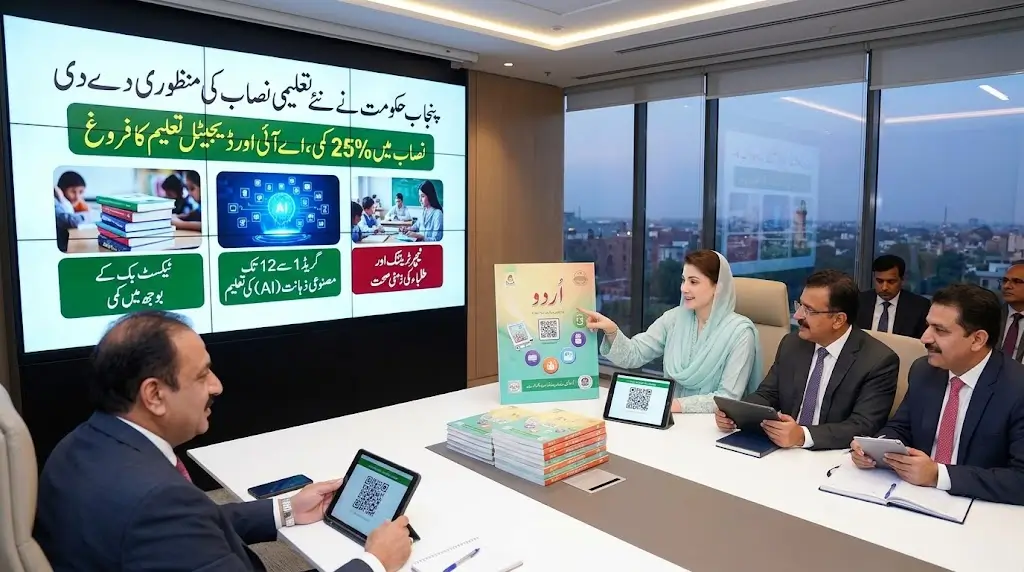
Punjab Chief Minister Maryam Nawaz approved the new curriculum during a special meeting on education reforms held in Lahore. Education officials presented the proposed curriculum developed by the Punjab Education Curriculum, Training and Assessment Authority (PECTAA).
The revised approach focuses on reducing the academic burden on students while introducing digital learning, artificial intelligence, teacher training and better support for students’ mental well-being.
New Curriculum to Cover Major School Subjects
According to the details presented during the meeting, the new curriculum will cover several important areas of school education, including:
- English
- Mathematics
- Urdu
- Social Studies
- Early Childhood Education
The government intends to make these subjects more focused and easier for students to understand. Instead of relying heavily on memorization, the curriculum is expected to encourage understanding and practical learning.
This change is particularly important for younger students, who can find large numbers of textbooks and lengthy lessons difficult to manage.

Number of Textbooks to Be Reduced by 25 Percent
One of the major changes approved by the Punjab government is a 25 percent reduction in the number of books used by students.
The purpose of reducing textbooks is to lower the academic burden on children without removing essential educational content. The government wants students to spend more time understanding concepts instead of simply memorizing information for examinations.
A lighter curriculum could also give teachers more time to explain lessons, conduct classroom activities and focus on students who need additional support.
QR Codes to Connect Textbooks With Video Lessons
The revised textbooks are also expected to include QR codes that students can scan using digital devices.
These QR codes will connect learners to video lessons related to specific topics in their textbooks. This will provide an additional learning method for students who want to understand a lesson through visual or video-based explanations.
For example, a difficult mathematics concept or science-related topic could be supported by a video lesson that explains the concept step by step.
The addition of QR codes represents a move toward combining traditional textbooks with digital education resources.
AI Curriculum Planned From Grade 1 to Grade 12
Artificial intelligence is another major area included in Punjab’s education reform plans.
Chief Minister Maryam Nawaz directed officials to prepare an AI curriculum for students from Grade 1 to Grade 12. This means artificial intelligence education is being considered across different stages of school education rather than being limited to older students.
The objective is to gradually introduce students to modern technology and prepare them for an increasingly digital economy.
An AI-focused curriculum could include age-appropriate concepts at different education levels. Younger students may be introduced to basic digital and logical concepts, while older students could learn more advanced applications of artificial intelligence.
The exact syllabus and subjects to be included in the AI curriculum will depend on the framework prepared by the relevant education authorities.
Textbook Printing Deadline Set Before March
The chief minister also directed officials to ensure that the printing of textbooks is completed before March.
Completing the printing process on time is important because delays in textbooks can create problems for students and teachers at the beginning of an academic session.
The direction is intended to help ensure that students receive their required learning materials without unnecessary delays.
Mental Health Support for Teachers and Students
The education reforms are not limited to textbooks and technology.
The meeting also discussed mental health training for teachers. Teachers play an important role in identifying students who may be experiencing emotional or psychological difficulties, particularly because they interact with students regularly.
A proposal to appoint visiting psychologists in every district was also reviewed.
In addition, online counseling facilities for students were proposed. Such services could provide students with another way to seek professional support, particularly in areas where access to psychologists may be limited.
Punjab Moves Toward Ending Corporal Punishment
The meeting also reached a consensus regarding legislation aimed at eliminating corporal punishment in schools.
The proposed measure reflects a move toward creating a safer and more supportive learning environment for children.
Instead of physical punishment, schools can focus on classroom management, communication, counseling and positive disciplinary methods.
Further details about the proposed legislation, including its implementation and enforcement mechanism, would depend on the formal legal process.
Saturdays to Be Used for Teacher Training
Another important part of the education reform plan is the introduction of regular teacher training.
Under the proposed arrangement, Saturdays will be designated for teacher training. Textbook authors are expected to conduct training sessions so teachers can better understand the material and teaching approach used in the revised curriculum.
This could help teachers become familiar with new lessons, digital resources and changes in the curriculum before they are introduced in classrooms.
Regular professional development is particularly important when a curriculum undergoes major changes. Teachers need to understand not only what students are expected to learn but also how those concepts should be taught.
Greater Focus on AI, Digital Literacy and Laboratories
The Punjab government says it wants to develop a stronger education model for public schools.
The proposed model will place greater emphasis on:
- Artificial intelligence
- Digital literacy
- Laboratory-based learning
- Primary education
- Modern teaching methods
- Teacher professional development
This represents a broader shift from a traditional textbook-centered approach toward a combination of classroom teaching and technology-supported learning.
Laboratories can also give students opportunities to understand concepts through practical activities instead of depending entirely on written material.
English Training Completed for 35,000 Teachers
During the meeting, officials also briefed the chief minister about progress in English-language teacher training.
According to the briefing, English-language training for 35,000 teachers across 31 tehsils in 12 districts has been completed.
Improving teachers’ English skills can support classroom communication and help educators use a wider range of educational resources.
The training initiative is part of the government’s broader effort to improve teaching quality alongside curriculum reforms.
What the New Curriculum Could Mean for Students
The proposed changes could affect several aspects of students’ daily learning experience.
A reduction in the number of textbooks may make schoolwork easier to manage, while QR codes could provide students with additional digital explanations when they find a topic difficult.
The planned AI curriculum could also introduce students to technology at an earlier stage of education. Meanwhile, teacher training and mental health support could address areas that go beyond traditional academic performance.
However, the effectiveness of these reforms will depend on how consistently they are implemented in schools. Access to smartphones, internet connectivity, trained teachers, laboratories and counseling services may also vary between different areas.
When Will the New Curriculum Be Implemented?
The government has directed officials to complete textbook printing before March, but the exact implementation schedule for every component of the reform plan will depend on the relevant education authorities and formal announcements.
Students, parents and teachers should therefore rely on official Punjab education department notifications for confirmed implementation dates, textbook distribution details and final curriculum information.
Frequently Asked Questions
What is the new Punjab school curriculum?
It is a revised curriculum aimed at reducing students’ textbook burden and encouraging understanding-based learning instead of excessive rote memorization.
How many textbooks will be reduced?
Officials said the number of books will be reduced by 25 percent under the new curriculum plan.
Will the new textbooks include digital content?
Yes. The planned textbooks will include QR codes that can connect students to video lessons related to different topics.
Will AI be taught in Punjab schools?
The Punjab government has directed officials to develop an AI curriculum covering students from Grade 1 to Grade 12.
Will teachers receive training?
Yes. Saturdays are planned as teacher-training days, with textbook authors expected to participate in the training sessions.
What subjects are included in the new curriculum?
The curriculum presented during the meeting covers English, Mathematics, Urdu, Social Studies and Early Childhood Education.
Is Punjab planning mental health support for students?
The meeting reviewed proposals for visiting psychologists in every district and online counseling facilities for students, along with mental health training for teachers.
What is the government doing about corporal punishment?
The meeting reached a consensus on legislation aimed at eliminating corporal punishment in schools. Further details will depend on the formal legislative process.
Conclusion
Punjab’s new education reform plan combines curriculum changes with digital learning, AI education, teacher development and student well-being. The proposed 25 percent reduction in textbooks, QR-linked video lessons and planned AI curriculum from Grade 1 to Grade 12 are among the most notable changes.
The government is also focusing on teacher training, mental health support, laboratory learning and the proposed elimination of corporal punishment. If implemented effectively, these measures could change how students and teachers approach classroom learning in Punjab’s public schools.
For parents and students, the next important step will be the release of official details about the final curriculum, textbooks, implementation dates and digital learning resources.
Read Article Link Here: Official Parwaz Card Registration Portal for Application – Know Details and How to Become Eligible