The Punjab Green Tractor Scheme 2026 is continuing under the provincial government’s agricultural mechanization program, with separate low-power and high-power tractor phases planned for farmers.
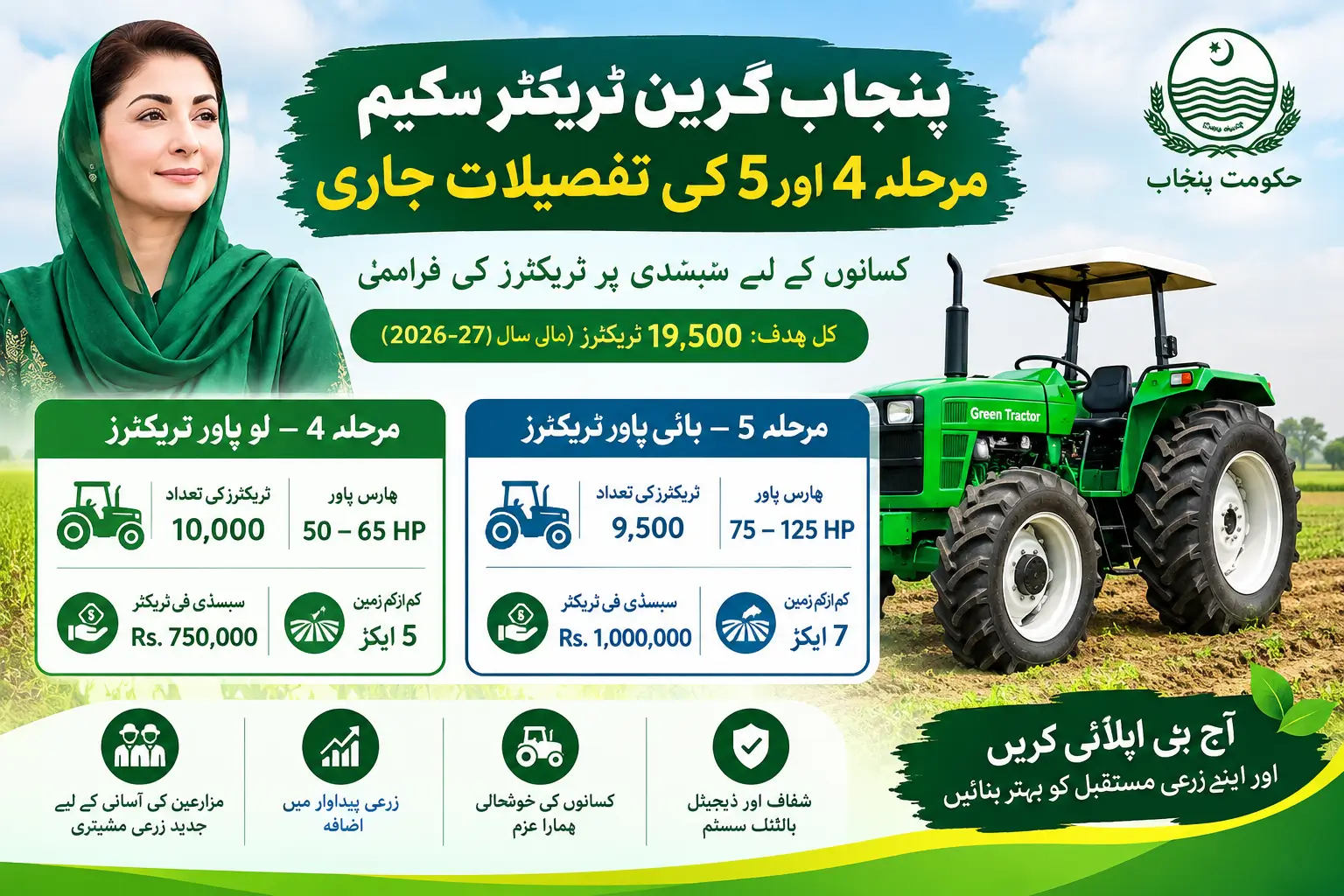
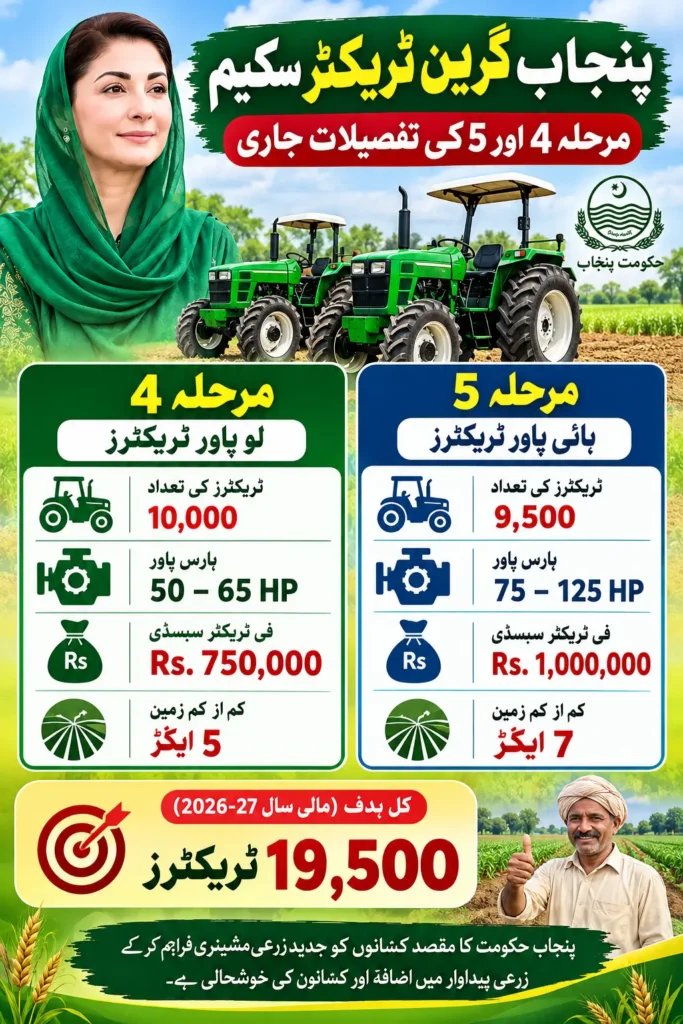
According to the Punjab Agriculture Department, Phase IV will provide 10,000 subsidized tractors in the 50–65 HP category, while Phase V will provide 9,500 tractors ranging from 75 to 125 HP. The two phases together target 19,500 tractors during the 2026–27 financial year.
The official program information also specifies different landholding requirements and subsidy amounts for the two categories.
Punjab Green Tractor Scheme 2026 – Latest Details
Here is a quick overview of the two current phases:
| Feature | Phase IV | Phase V |
|---|---|---|
| Tractor category | Low Power | Hi Power |
| Number of tractors | 10,000 | 9,500 |
| Horsepower | 50–65 HP | 75–125 HP |
| Subsidy per tractor | Rs. 750,000 | Rs. 1,000,000 |
| Minimum landholding | 5 acres | 7 acres |
| Financial year | 2026–27 | 2026–27 |
These figures are listed by the Punjab Agriculture Department under its Chief Minister’s initiatives for 2026–27.
Phase IV: 10,000 Tractors with Rs. 750,000 Subsidy
Under CM Punjab Green Tractor Program Phase IV, the government plans to provide 10,000 tractors to eligible farmers.
The tractors in this phase will have an engine power range of 50 to 65 horsepower. Each selected farmer is eligible for a Rs. 750,000 subsidy toward the tractor.
The official eligibility information lists a minimum landholding requirement of 5 acres for this low-power tractor category.
Phase V: 9,500 High-Power Tractors
The next category is the CM Punjab Hi-Power Green Tractor Program Phase V.
Under this phase:
- 9,500 tractors are planned.
- Tractor power will range from 75 to 125 HP.
- The subsidy is Rs. 1 million per tractor.
- Farmers must have at least 7 acres of land according to the official program details.
The Punjab Agriculture Department currently provides an application section for the Hi-Power Green Tractor Program on its official Green Tractor Program page.
How Many Tractors Are Included in Phase 4 and Phase 5?
The two phases have been designed for different tractor categories.
Phase IV: 10,000 tractors
Phase V: 9,500 tractors
This brings the combined target to:
10,000 + 9,500 = 19,500 tractors
The official 2026–27 initiative page lists the same overall targets for the low-power and high-power programs.
How Much Subsidy Is Available?
The subsidy depends on the tractor category selected under the program.
For Phase IV, the subsidy is Rs. 750,000 per tractor.
For Phase V, the subsidy increases to Rs. 1 million per tractor.
This means the government has set a higher subsidy amount for the high-power tractor category.
Who Can Apply for the Green Tractor Scheme?
The official program information identifies different minimum landholding requirements for the two phases.
Phase IV Eligibility
Farmers applying for the low-power tractor category need:
- At least 5 acres of land
- Eligibility under the Punjab Green Tractor Program
- Verification of the required farmer and land records
Phase V Eligibility
For the high-power tractor category, the official target is farmers with:
- At least 7 acres of land
- Eligibility under the Hi-Power Green Tractor Program
- Required record verification
The final eligibility conditions should always be checked against the latest official advertisement or application portal because program requirements can be updated.
Green Tractor Scheme Application Process
The Punjab Agriculture Department has provided an official Green Tractor Program page that includes an application section for the Hi-Power Green Tractor.
Farmers should use the official Agriculture Department information rather than relying on unofficial websites or social media posts when submitting an application.
The general process involves:
- Open the official Green Tractor Program information page.
- Select the relevant tractor program.
- Review the eligibility requirements.
- Complete the required application information.
- Submit the application through the designated system.
- Wait for verification and the official selection process.
How Are Farmers Selected?
The Green Tractor Program has used a digital balloting system in earlier phases to select successful applicants from eligible farmers.
The Agriculture Department’s previous program material confirms that digital balloting was used for farmer selection and that successful farmers were subsequently required to complete the tractor purchase process.
Therefore, submitting an application does not by itself guarantee that a farmer will receive a tractor. Selection depends on the official eligibility and balloting process applicable to the relevant phase.
What Happens After Selection?
Selected farmers are generally required to pay their own share of the tractor cost within the specified period.
The program’s procurement documentation states that a selected farmer must book the tractor by depositing the farmer’s share with the concerned manufacturer. The manufacturer then delivers the tractor according to the agreed schedule, subject to the required inspection and clearance.
Farmers should therefore keep track of official notifications after the balloting process.
Punjab Green Tractor Scheme 2026 Budget
The Punjab Agriculture Department’s 2026–27 initiative data lists separate costs and allocations for Phase IV and Phase V.
| Program | Overall Cost | 2026–27 Allocation |
|---|---|---|
| Phase IV – Low Power | Rs. 7,648.2 million | Rs. 6,261 million |
| Phase V – Hi Power | Rs. 9,596.55 million | Rs. 9,900 million |
These figures come from the department’s official Chief Minister’s Initiatives listing.
Why the Green Tractor Program Matters for Farmers
The program is part of Punjab’s broader agricultural mechanization effort. Providing access to tractors can help farmers carry out cultivation and other farm operations with greater access to mechanized equipment.
The Agriculture Department has also listed other mechanization initiatives, including programs involving advanced agricultural machinery and technology.
Important Update for Farmers
Farmers should check the latest official announcement before applying or paying any amount.
The Agriculture Department has published Green Tractor Program notices and application-related updates through its official channels. Its 2026 initiative listings also show that program deadlines and announcements can change.
Do not submit personal information or money through an unofficial website claiming to process the Green Tractor Scheme application.
Punjab Green Tractor Scheme 2026 FAQs
How many tractors will be provided under Phase IV?
The official target for Phase IV is 10,000 tractors in the 50–65 HP category.
What is the Phase IV tractor subsidy?
The subsidy for Phase IV is Rs. 750,000 per tractor.
How many tractors are included in Phase V?
Phase V has a target of 9,500 high-power tractors.
What is the Phase V subsidy?
Eligible farmers under Phase V are listed for a Rs. 1 million subsidy per tractor.
What is the minimum land requirement for Phase IV?
The official program listing specifies 5 acres or more for Phase IV.
What is the minimum land requirement for Phase V?
The official listing specifies 7 acres or more for Phase V.
Where can I find the official Green Tractor Scheme information?
The Punjab Agriculture Department maintains the official Chief Minister’s Punjab Green Tractor Program page, including information about the Hi-Power Green Tractor application.
Final Summary
The Punjab Green Tractor Scheme 2026 includes two major tractor categories for the 2026–27 financial year.
Phase IV targets 10,000 tractors of 50–65 HP, with a Rs. 750,000 subsidy and a minimum landholding requirement of 5 acres.
Phase V targets 9,500 tractors of 75–125 HP, with a Rs. 1 million subsidy and a minimum landholding requirement of 7 acres.
Farmers interested in the scheme should rely on the Punjab Agriculture Department’s latest announcements for application dates, eligibility verification, balloting results and payment instructions.
Read Article Link Here: Parwaaz Card Applicant Feature Launched: Complete Benefits Explained