
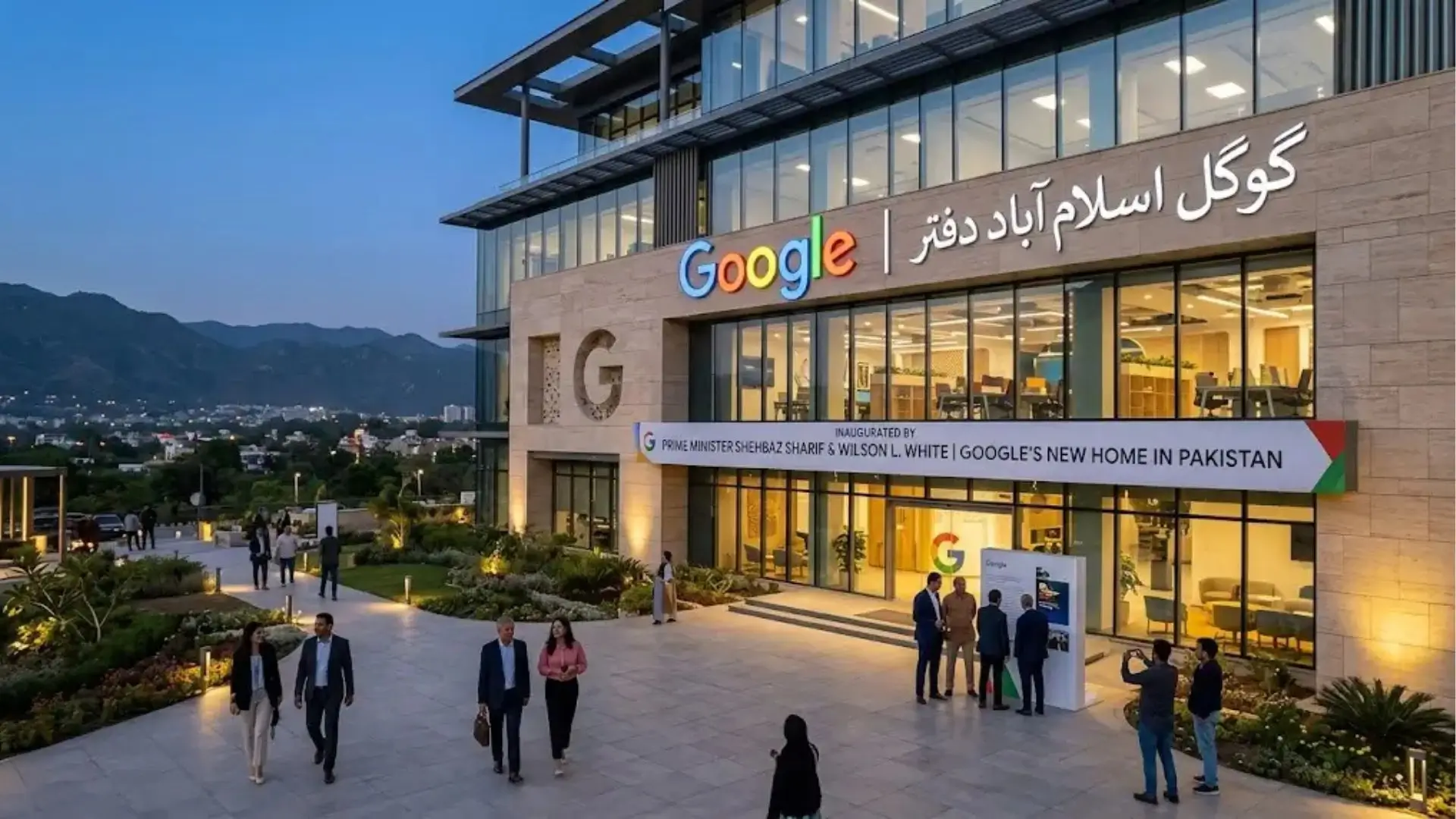
Google Just Opened an Office in Islamabad
Google Just Opened an Office in Islamabad. For over ten years, Google worked with Pakistan from a distance, running programs, funding scholarships, and training developers, but never had a physical address in the country. That changed this week. The tech giant officially launched its Islamabad office, and the event was big enough to draw Prime Minister Shehbaz Sharif himself to the ribbon-cutting, alongside Google’s VP for Global Affairs, Wilson L. White, and US Chargé d’Affaires, Natalie Baker. It’s easy to treat this as routine corporate news. It isn’t. Here’s why.
A Decade of Groundwork, Finally Made Official
Google’s relationship with Pakistan didn’t start this week it’s been building quietly since long before anyone had a building to point to. What’s new is the commitment: a physical office means dedicated local staff, faster decision-making, and a direct relationship with the government rather than one filtered through regional offices in Dubai or Singapore.
PM Shehbaz used the moment to make a broader pitch. Pakistan, he noted, has one of the youngest populations on the planet a demographic advantage that means little without the right training and opportunities behind it. A Google office on the ground, in theory, puts the company closer to that talent pool instead of managing it remotely.
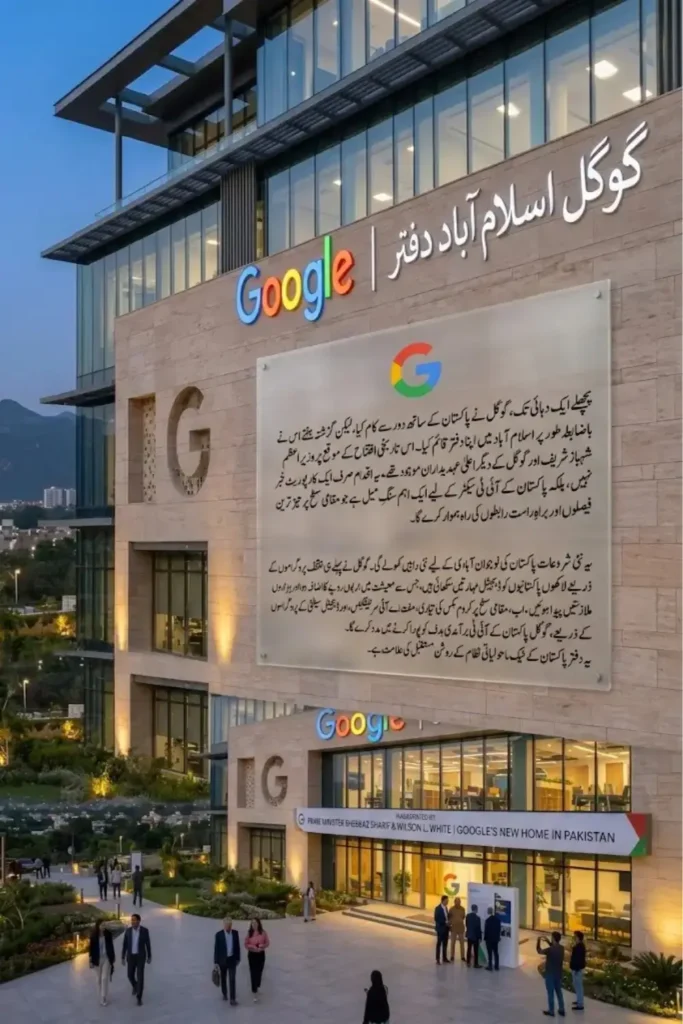
For his part, Wilson White tied the move directly to Pakistan’s own economic goals, saying Google’s plans line up with the government’s ambition of building a $30 billion IT export industry.
The Track Record White Brought to the Table
To back up the announcement, White shared a decade’s worth of figures on what Google’s presence has already meant for Pakistan:
- An estimated Rs. 3.9 trillion in economic activity generated for local households and businesses over ten years
- Roughly 960,000 jobs supported across the country
- 350,000 Career Certificate scholarships awarded since 2022, with over 80% of recipients landing a job or growing a business within six months
- 300,000 developers reached through Google’s various developer programs
- 50,000 developers trained specifically in generative AI and Google Cloud through the AI Seekho initiative
- 120 local gaming and app studios supported via Think Apps and App Design Masterclasses
Combined, Google says its programs have delivered digital skills training to more than 1 million people across the country: students, teachers, developers, and creators alike.
These are self-reported figures, so it’s fair to take the economic-impact number with some caution. But the range of programs behind it is real, documented, and has been running for years; this isn’t a one-off announcement dressed up in numbers.
Chromebooks Will Now Be Assembled in Pakistan
Beyond training and software, there’s a manufacturing angle too. Google has teamed up with Tech Valley, Allied, and the National Radio and Telecommunication Corporation to launch a local Chromebook assembly line, with capacity for up to 500,000 units. That’s a meaningful shift moving from purely digital investment into physical production, which could feed into Pakistan’s push for local electronics manufacturing and cheaper access to devices for schools.
Free Gemini Access for Students
The announcement that will probably matter most to ordinary people: Google Gemini, the company’s AI assistant, is now free for Pakistani students for a full year. AI tool subscriptions aren’t cheap, and for many students that cost alone is a barrier to using them seriously. Removing it, even temporarily, opens the door for a much wider group of young people to actually experiment with AI in their studies rather than just read about it.
White framed this as part of a bigger goal not just teaching people about AI, but making sure they can use it well enough to be competitive in a digital economy.
Digital Safety Hasn’t Been Ignored Either
Alongside the economic and AI-focused announcements, Google also highlighted its Digital Safar program, which focuses on online safety and digital citizenship. So far it’s reached more than 300,000 students and 5,000 educators. As more of Pakistan — especially smaller cities comes online, this kind of training arguably matters as much as the job-focused programs, since it shapes how safely people, particularly younger users, engage with the internet in the first place.
Reading Between the Lines
Google Just Opened an Office in Islamabad. An office opening might sound like a formality, but it’s a signal. It tells Pakistan’s tech industry, and other potential investors watching from outside, that a company like Google now considers Pakistan important enough to manage directly rather than from afar. That’s nothing; it can influence how other multinationals view the country’s readiness for serious tech investment.
Whether this actually moves the needle on Pakistan’s $30 billion IT export target will come down to execution: reliable infrastructure, consistent policy, and whether these training programs continue to produce people who can turn skills into sustainable jobs. But as a starting point, having a company like Google commit to a physical, permanent presence gives the local tech ecosystem a real reason to feel optimistic.
Also Read Article Link Here: Petrol Price in Pakistan Today: Latest Update After Another Hike